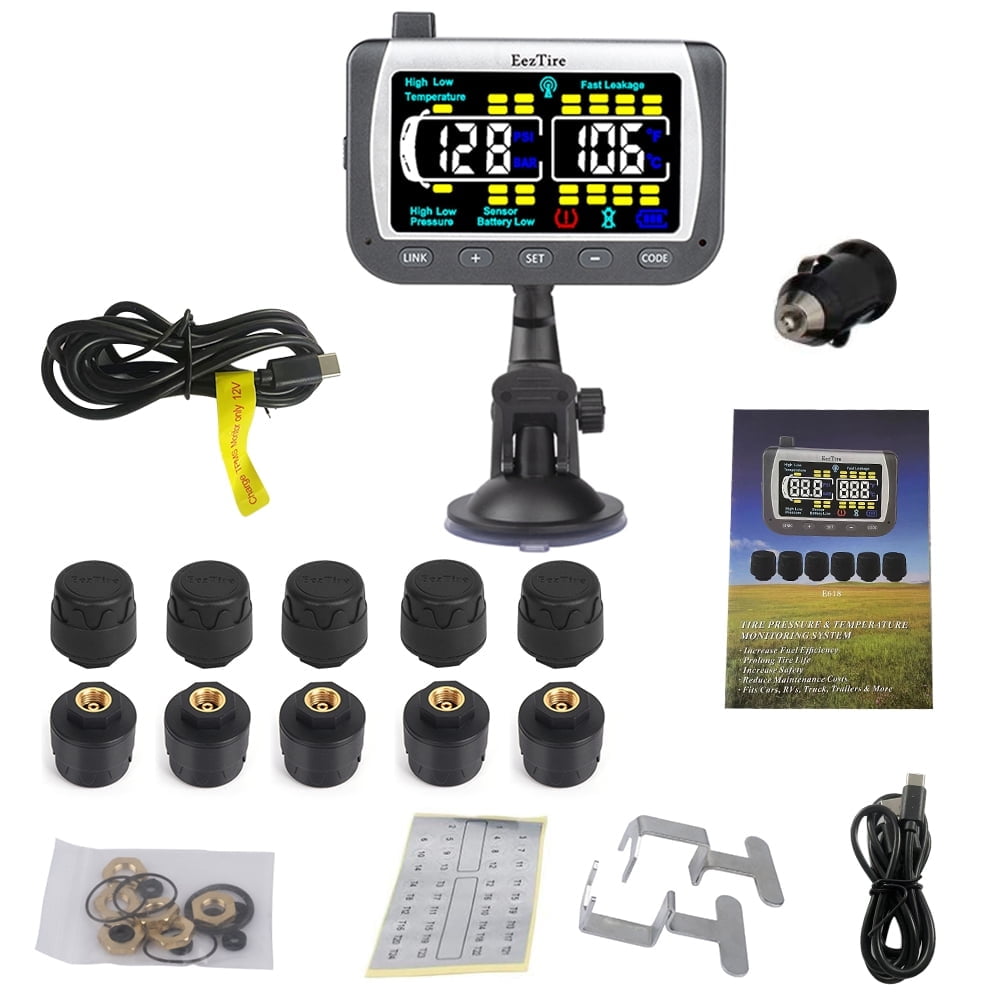
A tire pressure monitor sensor usually costs about $30 to $100 for the part alone, while professional replacement commonly ranges from $50 to $250 per sensor depending on the vehicle, sensor type, programming requirements, and labor charges.
For drivers in the United States, replacing a tire pressure monitoring system (TPMS) sensor is a common maintenance expense when a dashboard warning light appears or a sensor battery reaches the end of its service life. The total cost depends on whether you purchase an aftermarket or original equipment manufacturer (OEM) sensor, and whether the sensor needs programming before installation.
A TPMS sensor is a small electronic device installed inside a tire assembly that measures air pressure and sends information to the vehicle’s computer. Understanding the parts cost, labor charges, and additional service requirements can help drivers estimate a realistic repair bill and avoid unnecessary replacements.
Source: hitchesguide.com
How Much Does a Tire Pressure Monitor Sensor Cost?
A replacement tire pressure monitor sensor generally costs between $30 and $100 for the sensor unit itself. Prices vary because some vehicles require simple programmable sensors while others use vehicle-specific OEM components.
When installation is included, most drivers can expect to pay approximately $50 to $250 per sensor. The final price depends on labor rates, tire removal requirements, sensor programming, and whether additional tire services are performed at the same time.
Source: amazon.ca
Sensor part only
Aftermarket TPMS sensors commonly cost around $30 to $70, while OEM sensors may cost $50 to $150 or more depending on the vehicle.
Installation service
A repair shop may charge additional labor for removing the tire, installing the sensor, balancing the wheel, and completing the relearn process.
Complete replacement service
A full TPMS sensor replacement appointment may cost more when programming tools or specialized procedures are required.
Typical TPMS Sensor Replacement Cost Examples
The following examples show estimated costs for common replacement situations. Actual prices vary by vehicle model, location, and repair facility.
Single sensor replacement
Estimated total cost: about $50 to $250 for one wheel.
Replacing four sensors
Estimated total cost: about $200 to $800 when all sensors are replaced together.
What Is a Tire Pressure Monitor Sensor and Why Does It Cost Money to Replace?
A tire pressure monitor sensor is an electronic component that measures tire air pressure and communicates with a vehicle’s TPMS control system. Most modern vehicles sold in the United States use direct TPMS sensors installed inside each wheel.
The replacement cost comes from more than the sensor itself. Technicians often need to remove the tire from the wheel, install the new sensor, balance the tire if necessary, and program the vehicle to recognize the replacement sensor.
Source: docs.cholonautas.edu.pe
Sensor electronics
The sensor contains pressure-measuring components, a transmitter, and a battery that eventually wears out.
Programming requirement
Many vehicles require a relearn procedure so the vehicle computer can identify the new sensor.
Tire service labor
The sensor is located inside the tire area, which means access usually requires professional tire equipment.
Direct TPMS vs Indirect TPMS Cost Differences
Direct TPMS systems use physical sensors inside the wheels, so replacement involves sensor hardware. Indirect TPMS systems use wheel speed information from the anti-lock braking system and usually do not require individual pressure sensors.
Direct TPMS
Usually has higher replacement costs because each wheel contains an electronic sensor.
Indirect TPMS
May avoid sensor replacement costs because it calculates pressure changes through wheel rotation data.
Factors That Affect TPMS Sensor Replacement Cost
Several factors influence how much a tire pressure monitor sensor replacement costs. The vehicle’s design, sensor technology, and service requirements can significantly change the final bill.
Comparing prices only by the sensor itself can be misleading because a cheaper sensor may still require additional programming or installation costs.
Source: hitchesguide.com
Vehicle make and model
Luxury vehicles and newer models may require more expensive OEM sensors or specialized programming.
OEM versus aftermarket sensors
OEM sensors are designed for specific vehicles, while aftermarket options may cost less but must still be compatible.
Sensor frequency
TPMS sensors commonly operate at different frequencies, such as 315 MHz or 433 MHz, depending on the vehicle market and manufacturer.
Labor rates
Repair costs vary based on local shop pricing, dealership rates, and included tire services.
Should You Replace One TPMS Sensor or All Four?
Replacing only the failed sensor is usually the least expensive option. However, if a vehicle has several original sensors with similar ages, replacing multiple sensors at the same time may reduce future service visits.
The best choice depends on sensor age, vehicle condition, and repair budget rather than a universal rule.
Replace one sensor
Usually makes sense when only one sensor has failed and the others are working normally.
Replace multiple sensors
May be practical when several sensors are reaching the end of their expected battery life.
Signs You May Need a New Tire Pressure Sensor
A faulty TPMS sensor often produces warning signs before complete failure. Recognizing these symptoms can help prevent confusion between a sensor problem and an actual tire pressure issue.
Source: hitchesguide.com
TPMS warning light stays on
A warning light that remains illuminated after correcting tire pressure may indicate a sensor or system problem.
Incorrect pressure readings
A sensor that reports inaccurate pressure values may need replacement.
No signal from one wheel
A vehicle scan tool may show that a specific sensor is not communicating.
Old sensor battery
Most TPMS sensors use built-in batteries that eventually lose power and cannot usually be replaced separately.
What to Check Before Buying a Replacement Sensor
Before purchasing a new TPMS sensor, confirm the exact vehicle information and sensor requirements. Buying an incompatible sensor can lead to installation problems or failure to communicate with the vehicle.
Check vehicle details
Confirm the year, make, model, and trim level.
Verify sensor compatibility
Check frequency, valve type, and programming requirements.
Common Mistakes When Replacing a TPMS Sensor
Many TPMS replacement problems happen because drivers focus only on the sensor price and overlook compatibility, installation, or programming requirements.
Source: walmart.com
Buying the wrong sensor
A sensor that does not match the vehicle specifications may not communicate correctly.
Ignoring programming
Some replacement sensors require activation or relearning before the vehicle recognizes them.
Replacing a working sensor unnecessarily
A warning light may also be caused by tire pressure issues or other TPMS system problems.
When Professional Help Is Recommended
Professional service is recommended when tire removal equipment, TPMS programming tools, or vehicle-specific procedures are required. Incorrect installation can damage tire components or leave the warning system inactive.
Dealership service
Useful for complex vehicle-specific systems but may have higher labor costs.
Tire shop service
Often provides TPMS replacement as part of normal tire maintenance.
Frequently Asked Questions
Q
How much does it cost to replace one tire pressure sensor?
Replacing one TPMS sensor typically costs about $50 to $250 including parts and labor. The exact price depends on the vehicle, sensor type, and whether programming is required.
Q
Can I replace a TPMS sensor myself?
Some experienced DIY mechanics can replace TPMS sensors with the correct tools, but the process often requires tire removal equipment and a programming tool. Professional installation is usually recommended.
Q
How long do tire pressure monitor sensors last?
Many TPMS sensors last several years because they use built-in batteries designed for long service life. Actual lifespan depends on driving conditions, sensor design, and vehicle usage.
Q
Do all four TPMS sensors need to be replaced at the same time?
No. A single failed sensor can often be replaced by itself. Replacing multiple sensors may make sense when several original sensors are aging and likely to fail soon.
Q
Why is my TPMS light still on after replacing the sensor?
The system may need a relearn procedure, the replacement sensor may not be programmed correctly, or another TPMS component may have a problem.
✦ Wrapping Up
Conclusion
A tire pressure monitor sensor usually costs between $30 and $100 for the part, but the complete replacement cost can increase to $50 to $250 per sensor after installation and programming. The most accurate estimate depends on your vehicle and the service requirements.
Before replacing a TPMS sensor, verify compatibility, consider labor and programming costs, and determine whether replacing one sensor or several sensors makes the most practical sense for your vehicle.
💡 Key Takeaway
Check your vehicle’s exact TPMS requirements before buying a replacement sensor, and include installation and programming costs when estimating the total repair price.