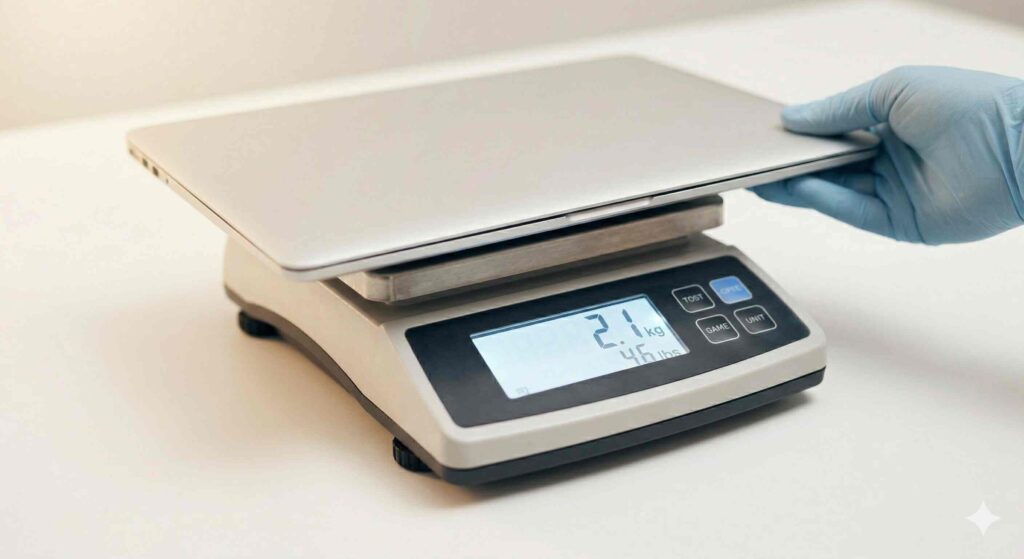
Most laptops weigh about 2.5 to 5.5 pounds (1.1 to 2.5 kg) on average.
If you’re wondering How much does an average laptop weigh, this guide breaks it down simply and clearly. I write about laptops from years of testing and hands-on use. You will learn typical weights, what drives weight changes, real examples, and smart buying tips. Read on to pick the right laptop for your needs and carry it with confidence.
Typical laptop weight ranges
Laptops fall into a few clear weight groups. Ultraportables and thin notebooks usually weigh between 1.5 and 3 pounds. Mainstream 13- to 15-inch laptops commonly sit in the 2.5 to 5.5 pound range. Gaming and workstation laptops can weigh 5.5 to 9 pounds or more. Knowing these groups helps answer How much does an average laptop weigh for your use case.
Quick summary for busy shoppers
If you want a fast takeaway: aim for under 3 lb if you fly or commute a lot. Choose 3–5 lb for a mix of portability and power. Pick 5.5+ lb only if you need top-end graphics or workstation performance. These targets help when you compare models and pack a bag.
Why these weight bands matter
Weight affects comfort, travel plans, and what bag you need. I learned this carrying devices on long trips and daily commutes. A light laptop saves energy and reduces shoulder strain. A heavy rig can be fine at a desk but painful in a backpack. Think about how you move before you buy.
Key factors that affect laptop weight
Several parts change the scale of a laptop.
- Screen size: Bigger screens add metal, glass, and a larger lid.
- Build material: Aluminum and magnesium alloys can be lighter than steel or thick plastic.
- Battery: Long-life batteries are heavier. More cells add ounces quickly.
- Cooling and GPU: Powerful processors and GPUs need bigger heatsinks and fans.
- Storage and drives: Extra SSDs or a 2.5-inch drive add weight.
Each factor affects How much does an average laptop weigh, so check specs when you compare models.

How much each component adds (practical numbers)
To make choices easier, here are typical extra weights to expect:
- Extra battery cells: +4–12 oz (110–340 g)
- Discrete GPU + cooling: +8–30 oz (225–850 g)
- 2.5-inch HDD versus SSD swap: HDD adds ~2–6 oz (60–170 g)
- Ruggedized chassis or extra ports: +3–10 oz (85–285 g)
These are rough figures. But they help you see why two laptops with the same screen can feel very different. When you compare specs, add these numbers mentally to estimate real carrying weight.
Materials, standards, and durability
Look for materials like magnesium alloy, carbon fiber, or aluminum if you want low weight and good strength. Some business laptops meet MIL-STD tests for drops and vibration. Those models often use stronger frames that can be light and durable. That balance matters when you ask How much does an average laptop weigh while keeping it safe.
Average weights by screen size
Here are typical weights you can expect by screen size. These numbers help answer How much does an average laptop weigh in practical terms.
- 11 to 12 inches: 1.8 to 3.0 pounds. Great for short trips and light work.
- 13 to 14 inches: 2.2 to 4.0 pounds. A good balance of portability and screen space.
- 15 inches: 3.5 to 5.5 pounds. Common for everyday use and light media work.
- 16 to 17 inches: 4.5 to 8.5 pounds. Favored by gamers and creators who need power.
These ranges are averages and will vary by model and configuration.
Model examples that match these ranges
To make this concrete, here are some representative models and where they sit:
- Light ultraportable (under 2.8 lb): MacBook Air, Dell XPS 13, many thin ultrabooks.
- Balanced 13–15 inch (2.5–4.5 lb): MacBook Pro 14 (depending on config), Lenovo ThinkPad T series.
- 15–17 inch power laptops (4–8.5 lb): Razer Blade 15, ASUS ROG, Dell G series, mobile workstations.
These reflect common builds in 2024–2026. Specific weights change by year and options like extra storage or larger batteries.
Real-world examples and personal experience
I have carried many laptops on trips and daily commutes. A 13-inch ultrabook at 2.6 pounds felt effortless on a long flight. A 15-inch gaming laptop at 7 pounds made me rethink my bag choice and caused shoulder strain on long walks. From that experience I learned to match laptop weight to how you move. If you travel daily, aim for under 3.5 pounds. If you work mostly at a desk, a heavier 15-inch or 17-inch model may be fine. These real tests help you judge How much does an average laptop weigh for your lifestyle.
Read about How Much Does A Laptop Screen Replacement Cost: Price Guide for 2026
Packing tips I use on trips
I learned to pack light. I avoid spare HDDs and carry a compact USB-C charger when possible. I choose a bag with padded straps and a hip belt for long walks. When I need power, I prefer a thin power bank and USB-C charging over hauling a full brick adapter. These habits cut ounces and make travel easier.
Practical tips to reduce carried weight
Small choices cut pounds without sacrificing usefulness.
- Choose SSD over extra HDDs for lower weight.
- Pick a carbon or lightweight aluminum chassis.
- Remove unused ports or optical drives if possible.
- Carry a lightweight charger or use USB-C charging when supported.
- Use a light bag designed for laptops to distribute load.
Each step changes how you feel carrying your machine and answers the question How much does an average laptop weigh in daily life.

More weight-saving moves that work
- Use external monitors at home instead of a larger laptop screen.
- Buy models with only the ports you need—less hardware often means less weight.
- Remove optical drives or unused trays where possible.
- Choose a smaller power adapter or a multi-device charger to reduce charger bulk.
These choices lower what you carry each day. They also extend mobility without sacrificing the features you need.
Buying checklist: match weight to needs
Use this short checklist when shopping.
- Decide your mobility level: commute, travel, or desk work.
- Set a weight limit: under 3 pounds for frequent travelers, 3–5 pounds for mixed use.
- Compare specs: battery size, materials, and cooling affect weight.
- Test in person when possible to feel the real weight.
Following these steps makes it easier to answer How much does an average laptop weigh for your specific choice.
Sample shopping scenarios
If you fly often: aim for 2–3 lb. If you commute daily by train: 3–4 lb is a good balance. If you mostly work at a desk and do video editing or gaming: 4.5+ lb makes sense. Use the checklist to match trade-offs like battery life, CPU, and GPU to the weight you can live with.
Frequently Asked Questions of How much does an average laptop weigh
How light can a laptop be without sacrificing performance?
Modern ultraportables can weigh under 2.5 pounds and still offer strong performance using energy-efficient chips. For heavy gaming or editing, expect the laptop to be heavier due to cooling and GPU needs.
Does screen size always determine laptop weight?
Screen size is a major factor but not the only one. Build material, battery capacity, and internal components also play big roles in overall weight.
Is there a big weight difference between SSD and HDD laptops?
Yes. Replacing an HDD with an SSD often saves a few ounces. Combined with a smaller chassis, the difference becomes noticeable for daily carrying.
Can a larger battery make a laptop feel bulky?
A larger battery usually increases weight and thickness. It also extends runtime, so choose based on how long you need to work unplugged.
Should I prioritize weight over durability?
Balance both. A very light laptop may use thinner materials that dent more easily. Look for lightweight options built with strong alloys if durability matters.
How to compare advertised weight vs real carry weight?
Manufacturers list the base weight only. Add the charger, dongles, and any peripherals you always carry. That gives you your true daily carry weight. For many people, the real weight is 10–25% above the spec sheet number. Try lifting the device with its power brick in the store if you can.
What about backpacks and ergonomics?
A well-designed bag reduces perceived weight. Look for padded straps, sternum straps, and a hip belt for loads over 10–12 lb. A good bag protects the laptop and saves your shoulders over time.
Conclusion
Knowing How much does an average laptop weigh helps you choose a model that fits your life. Laptops typically range from about 1.5 pounds for ultraportables to over 7 pounds for heavy gaming rigs. Focus on screen size, battery, and materials to match weight with your routine. Try devices in person when you can and set a clear weight limit before shopping. Ready to pick a laptop that you’ll enjoy carrying? Leave a comment with your needs or subscribe for more laptop buying advice.