Air duster effects usually wear off in hours, while chemical traces can remain 24–72 hours.
I have studied toxicology summaries and worked with clinicians on inhalant exposures, so I know how complex the question of how long does air duster stay in your system can be. This guide explains what air duster contains, how the body handles it, detection windows for tests, health risks, and clear steps to take after exposure. Read on to get practical answers and simple, evidence-based advice you can use right away.
What is air duster and what chemicals are in it?
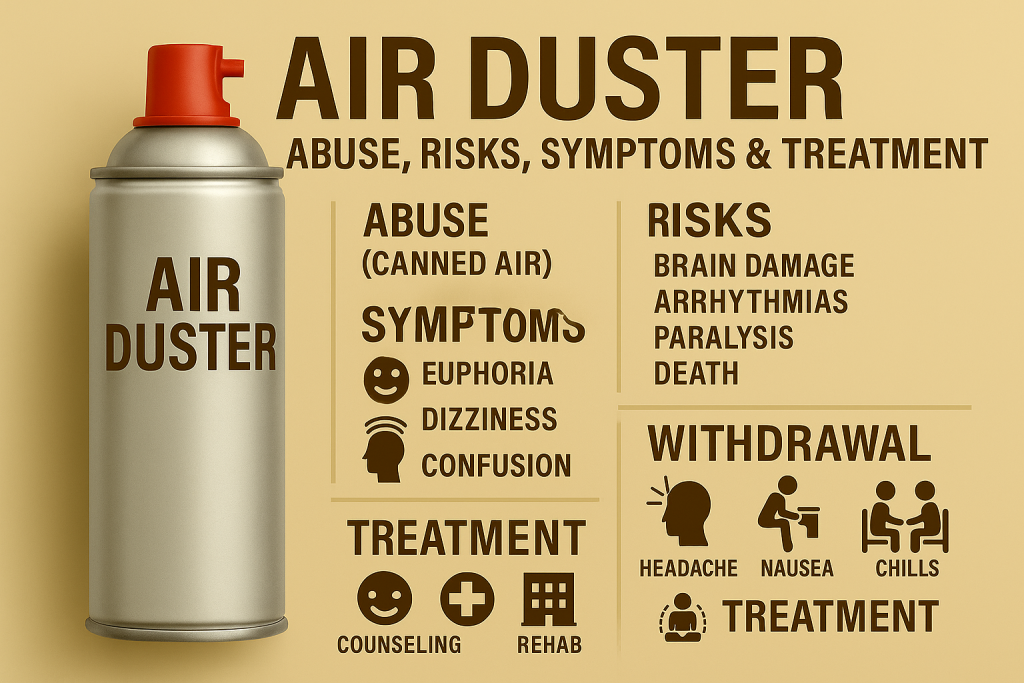
Air duster is a common canned product used to blow dust from electronics and small parts. Most cans contain volatile gases like 1,1-difluoroethane, tetrafluoroethane, propane, or butane. These gases are not meant to be inhaled and can harm the lungs and heart when misused.
Many people call inhaling these cans "huffing" or "sniffing." The chemicals are very volatile. That means they turn to gas fast and move through the lungs into the blood quickly.
How air duster is absorbed and metabolized
When someone inhales air duster, the gas moves into the lungs within seconds. From the lungs, the gas enters the bloodstream and distributes to tissues, including the brain. Some of the gas is exhaled unchanged, while some may be metabolized into small amounts of breakdown products that the liver and kidneys clear.
Metabolism varies by chemical type. Many hydrofluorocarbons and hydrocarbons have short biological half-lives, so the parent gas leaves the body fast. Repeated or heavy use can make clearance slower because the chemicals accumulate in fat tissue.
How long does air duster stay in your system?
This is the core question: how long does air duster stay in your system depends on what you mean by "stay." Immediate intoxication usually ends in hours. Chemical traces or metabolites may be detectable for days to weeks, depending on the test and frequency of use.
Typical detection windows:
- Breath: The parent gas may be detectable for minutes to a few hours after a single inhalation.
- Blood: Parent compounds often clear within hours, but tests that target specific breakdown products may find markers for up to 24–72 hours.
- Urine: Basic screens rarely detect these gases, but specialized testing can pick up metabolites within 24–72 hours after use.
- Hair: For repeated or chronic use, substances or their markers might appear in hair for months, showing a pattern of abuse rather than a single exposure.
Because each product has different chemicals, exact timelines vary. If someone inhaled a lot, or did so many times, how long does air duster stay in your system will be longer than after a single, light exposure.

Factors that change how long air duster stays in your system
A few common factors change how long does air duster stay in your system. These include the amount inhaled, how often it was used, the specific chemical in the can, and the person’s age, weight, and liver function.
Other factors matter too:
- Body fat: Fat stores can hold lipophilic gases and release them slowly.
- Health and metabolism: Faster metabolism and healthy lungs clear gases quicker.
- Ventilation: Fresh air reduces retained gas and speeds recovery.
- Co-use with alcohol or drugs: Combined use can slow clearance and raise risk.
All of these change how long the chemical effects and traces last in your body.
Short-term and long-term health effects
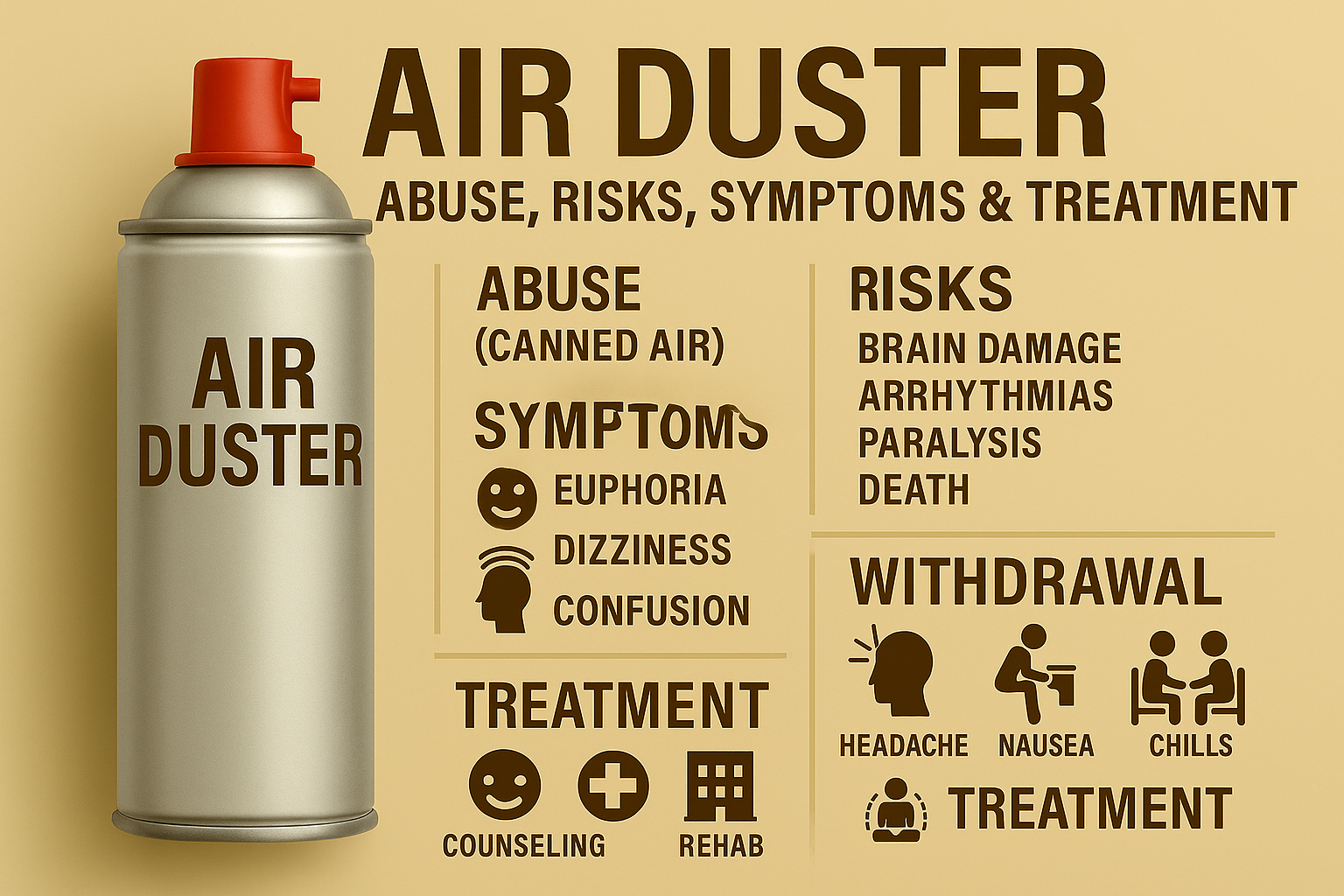
Short-term effects from inhaling air duster include dizziness, headache, slurred speech, nausea, and lack of coordination. Severe exposure can cause loss of consciousness, breathing trouble, or sudden heart rhythm problems that can be fatal.
Long-term or repeated abuse can harm the brain, lungs, liver, heart, and kidneys. Chronic users may show memory problems, mood changes, or motor issues. How long does air duster stay in your system is only part of the story—repeated retention raises the chance of lasting harm.

How testing and detection work
Standard workplace drug screens do not look for difluoroethane or similar gases. Specialized tests use gas chromatography or mass spectrometry to find the parent gas or metabolites. These tests are more costly and used mainly in clinical or forensic settings.
Detection timing depends on the test:
- Breath tests catch recent use within minutes to hours.
- Blood tests best detect exposure within hours.
- Urine tests can find some metabolites for 1–3 days.
- Hair tests may show a pattern of repeated use over months.
If you need testing, a poison control center or medical toxicologist can advise which test fits the situation.
What to do if someone inhales air duster
Take quick, calm steps if you suspect inhalation:
- Move the person to fresh air right away and keep them calm.
- Check breathing and responsiveness. If they are not breathing or are unresponsive, call emergency services and start CPR if trained.
- Call poison control or seek emergency care for severe symptoms such as chest pain, severe dizziness, confusion, or vomiting.
- Do not make the person vomit. Do not offer sedatives or alcohol. Let medical staff decide on tests and treatment.
Early care can shorten symptoms and reduce harm, and it can influence how long does air duster stay in your system by improving ventilation and support.
Personal experience and practical tips
In my work with clinicians, I saw a teen admitted after repeated inhalant use. Symptoms faded in a day with oxygen and rest, but follow-up tests showed markers for several days. That case taught me the value of fast action and the need for counseling after recovery.
Practical tips I use when advising others:
- Use air duster only as directed and never inhale intentionally.
- Keep cans away from teens and people with a history of substance misuse.
- If you or someone you know uses it to get high, seek help from a clinician or counselor quickly.
These steps cut risk and reduce how long does air duster stay in your system when exposure occurs.

Frequently Asked Questions of how long does air duster stay in your system
How long do the immediate effects last after inhaling air duster?
Immediate effects usually last minutes to a few hours, depending on dose and ventilation. Most people feel better within several hours with rest and fresh air.
Can air duster show up on a common drug test?
Most standard drug screens do not detect air duster chemicals. Specialized tests can detect gases or metabolites but are not routine.
Is a single sniff of air duster dangerous or fatal?
A single, small sniff often causes mild symptoms like dizziness. However, a large dose or sniffing in a small, enclosed space can be life-threatening and cause sudden death.
How long does chronic inhalant use affect the body?
Chronic use can lead to lasting brain, heart, and lung damage. The chemicals may persist longer in fat and hair, so signs of chronic use can be evident for weeks to months.
What should I do to speed recovery after exposure?
Move to fresh air, rest, and hydrate. Seek medical care if symptoms are severe or do not improve, and follow up with a healthcare provider for guidance.
Conclusion
Air duster chemicals usually leave the body quickly, with effects fading in hours and detectable traces often clearing within 24–72 hours after a single exposure. Repeated or heavy use can extend detection windows and raise the risk of lasting harm, so early action and medical follow-up matter. If you or someone you know misuses air duster, seek help, keep living spaces ventilated, and consult professionals for testing or treatment. Share this article, ask questions below, or subscribe for more clear, practical health guidance.