Air duster can be very dangerous — it can cause sudden injury, brain damage, heart failure, or death.
I’ve researched toxic inhalants and tested safe-cleaning methods for years, so I know how dangerous is air duster and why people must treat it like a hazardous chemical. This article explains what air duster is, how dangerous is air duster for short- and long-term health, real-world risks, safe use, and better alternatives. Read on to learn clear, practical steps to avoid harm and protect your family.

What is air duster and how it’s used
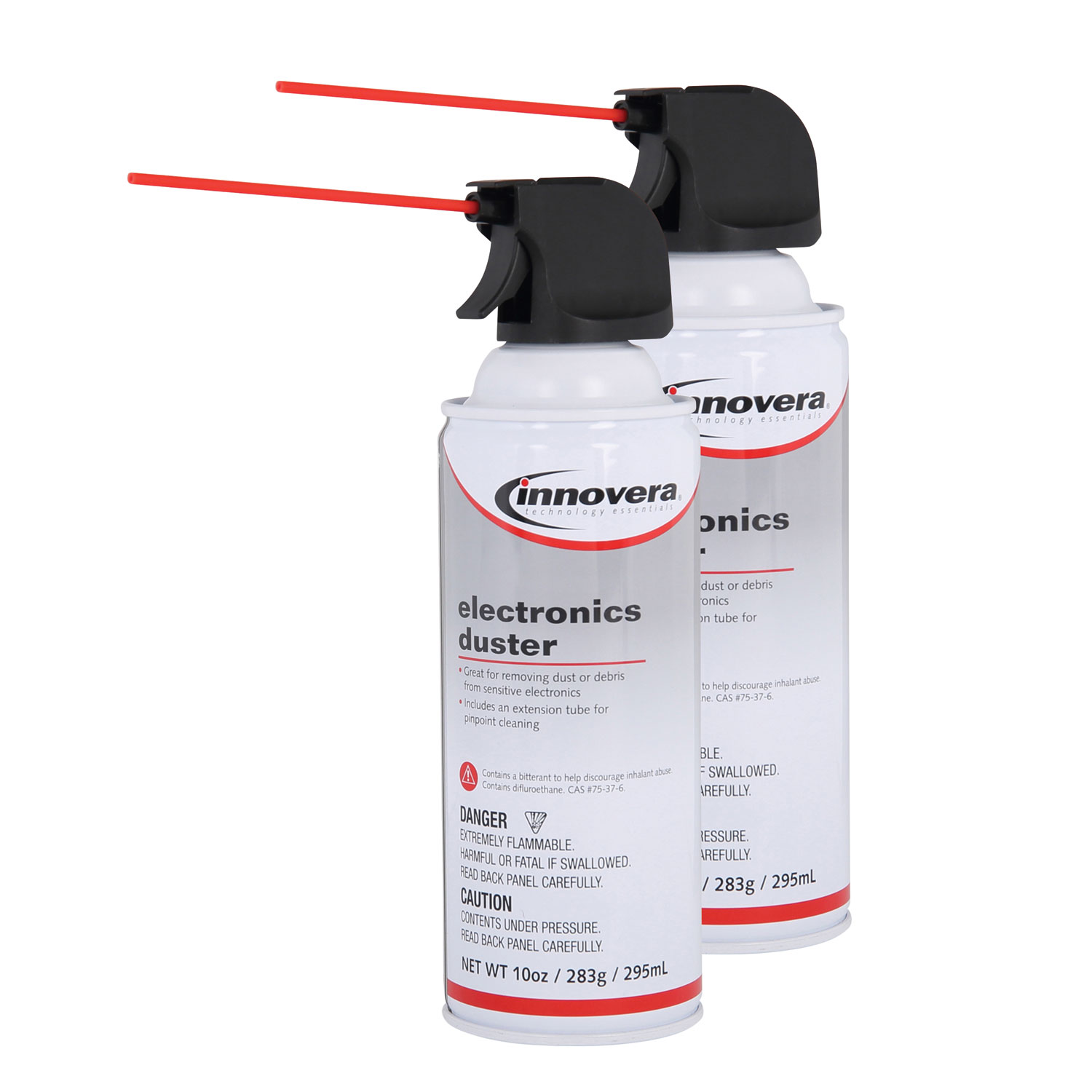
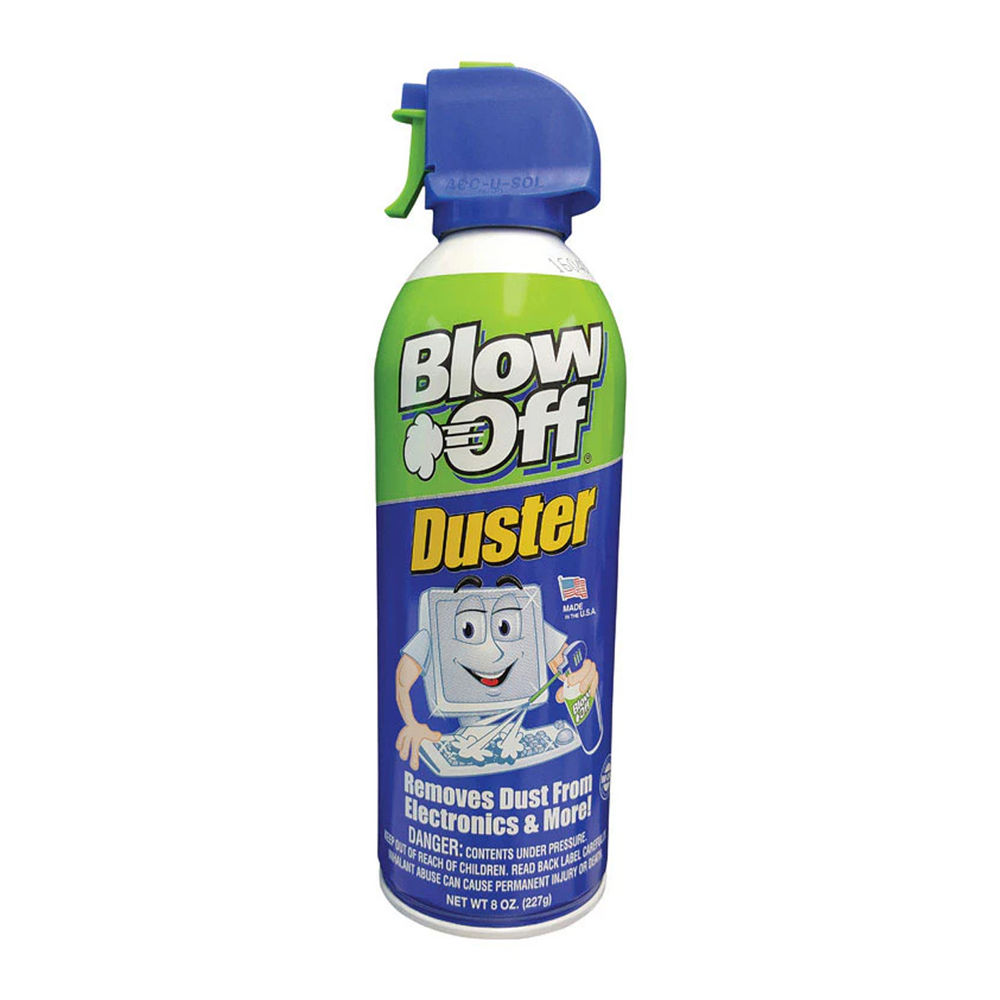
Air duster is a canned gas product used to blow dust from electronics, keyboards, and camera lenses. The can contains compressed gas or liquid propellant that becomes a fast blast of cold air when released. Common propellants include difluoroethane, tetrafluoroethane, and hydrocarbons. People use air duster because it is cheap, fast, and handy for cleaning tight spots.
Why people underestimate risks:
- It seems harmless because it cleans and looks like canned air.
- Labels are small and warnings are ignored.
- People assume short use cannot cause serious harm.
How dangerous is air duster here? The danger comes from the chemicals and the way people sometimes misuse them. Treat every can as a chemical product that can hurt you if inhaled, sprayed on skin, or used near heat.
How air duster can harm you: mechanisms and acute risks
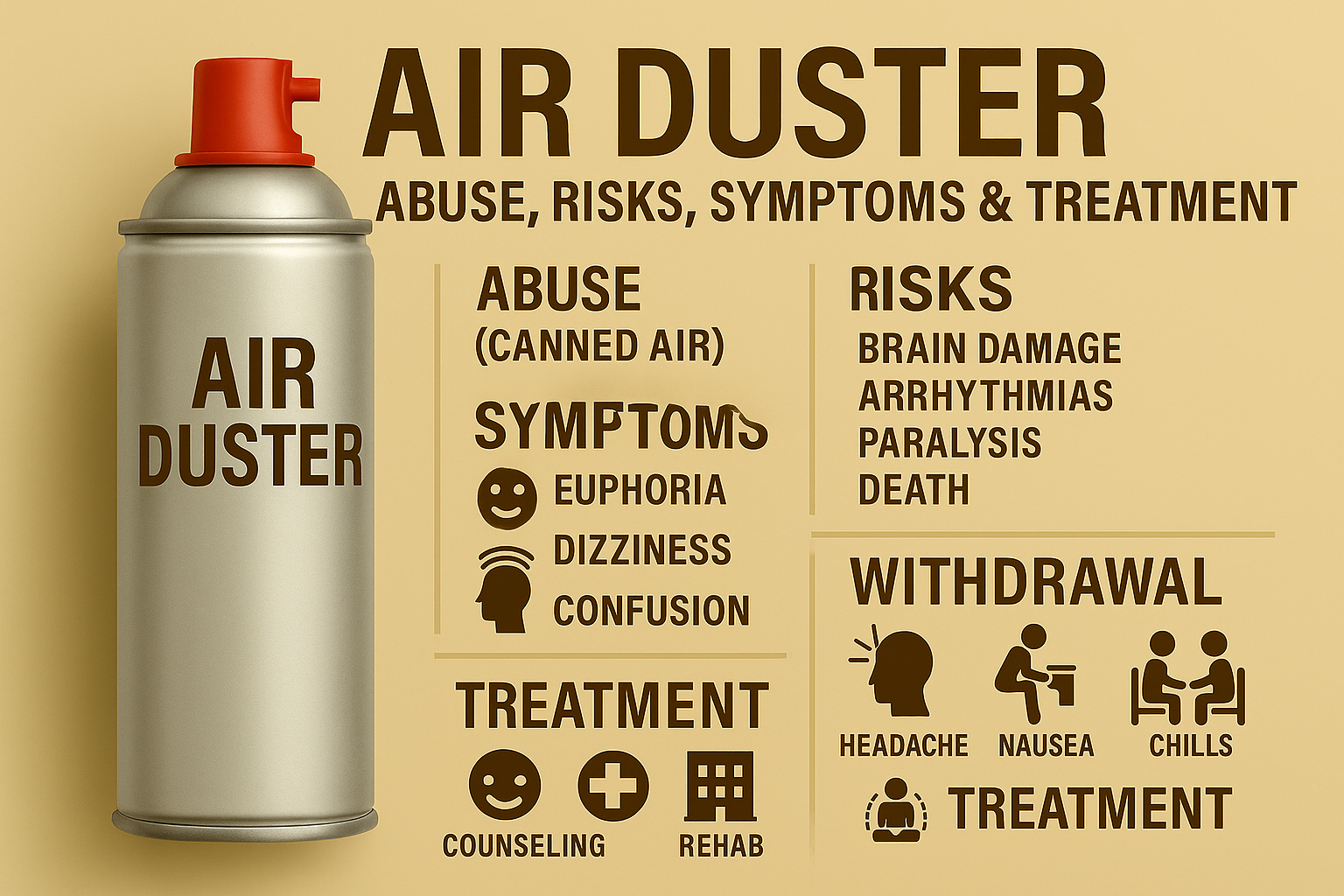
When asking how dangerous is air duster, focus on three main hazards: inhalation toxicity, frostbite from cold spray, and flammability or explosion. Each can cause serious injury quickly.
Inhalation toxicity
- Some propellants cause immediate intoxication when breathed deeply.
- Effects include dizziness, confusion, loss of coordination, and sudden unconsciousness.
- In severe cases, inhaling air duster can cause cardiac arrhythmia and sudden death.
Frostbite and cold injury
- The spray cools rapidly and can freeze skin and lips on contact.
- Eyes and delicate tissues are at risk when the nozzle is close.
- Repeated skin exposure can cause burns and blisters.
Flammability and pressure hazards
- Some formulas are flammable and can ignite near sparks or hot surfaces.
- Pressurized cans can rupture if exposed to heat, creating shrapnel risk.
How dangerous is air duster in acute misuse? Very dangerous — a few seconds of intentional inhalation or a close blast to skin can have lasting consequences.
Long-term effects and chronic risks
Repeated or heavy exposure raises different concerns. People who use air duster frequently or abuse it by inhaling can face persistent health issues.
Brain and nervous system
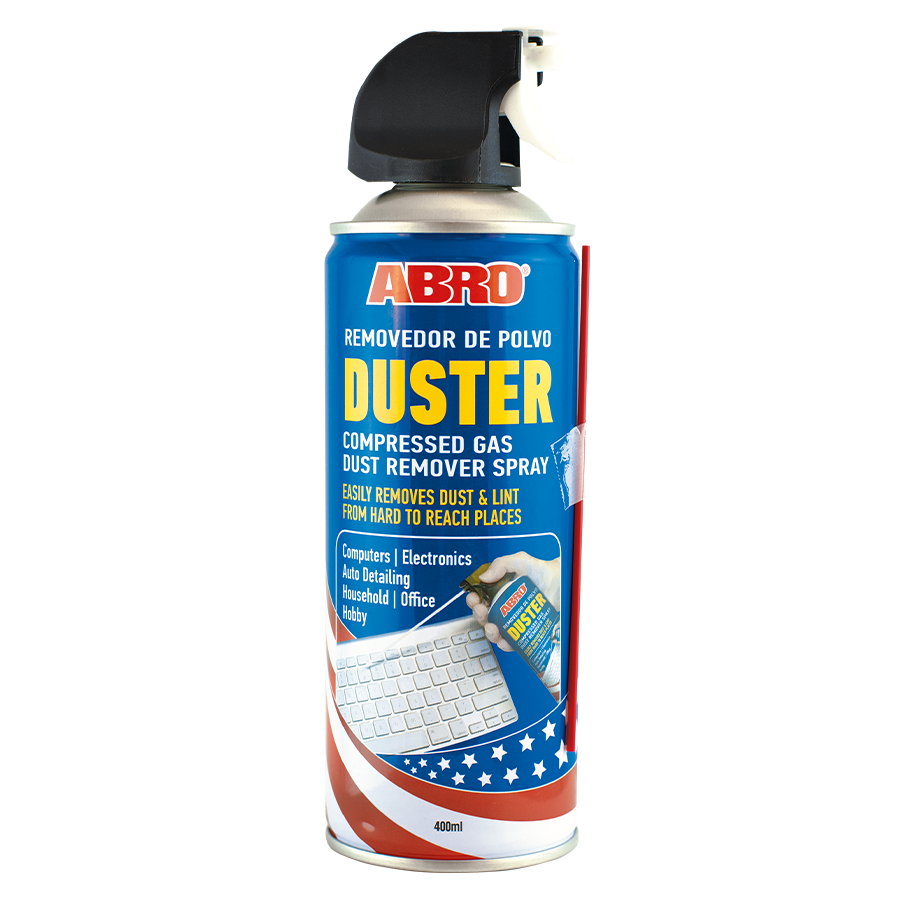
- Chronic exposure to some propellants can damage memory, concentration, and motor control.
- Neuropathy and cognitive decline have been documented in long-term users.
Heart and lungs
- Certain inhaled chemicals sensitize the heart, increasing risk of sudden cardiac arrest.
- Lungs can develop inflammation, scarring, or chronic breathing problems over time.
Reproductive and organ effects
- Some propellants may affect the liver, kidneys, or reproductive system with prolonged exposure.
- Effects are dose-dependent and vary by chemical type.
How dangerous is air duster for long-term users? Repeated misuse can cause lasting health damage and raise the risk of permanent disability.

Real-world cases, statistics, and what I’ve seen
Case reports and poison control centers show clear harms from air duster misuse. Emergency rooms see cases of unconscious people, severe frostbite injuries, and breathing-related collapses.
Examples and patterns
- Intentional inhalation for a high can lead to sudden death from heart failure.
- Accidents happen when cans are used indoors near electronics and heat sources.
- Young people and teens account for many misuse cases.
Personal experience
- I once helped clean a data center and found multiple nearly-empty cans stored near heat outlets. That close storage created both a fire and inhalation risk. We replaced cans with a shop vacuum and non-pressurized air systems.
- Lesson learned: convenience should not trump safety. Use safer tools and check labels.
How dangerous is air duster in everyday settings? In common home or office use, the risk is lower if you follow instructions, but misuse or poor storage can quickly make it very dangerous.
Safer use: practical tips to reduce risk
If you need to use air duster, follow practical safety steps. These reduce the chance you’ll face the worst effects when asking how dangerous is air duster.
Before use
- Read the label and warnings on the can.
- Work in a well-ventilated area and avoid confined spaces.
- Keep away from heat, open flames, and electrical sparks.
During use
- Hold the can upright and use short bursts only.
- Keep the nozzle several inches away from skin and eyes.
- Never inhale the spray or use it to cool yourself.
After use and storage
- Store cans in a cool, dry place away from sunlight and heat.
- Dispose of empty cans according to local hazardous-waste rules.
- Keep cans away from children and teens; lock them if necessary.
Alternatives to reduce risk
- Use a brush or microfiber cloth for delicate electronics.
- Use a small electric blower or vacuum designed for electronics.
- Use non-pressurized canned air systems that use filtered air.
How dangerous is air duster when you follow safety tips? Proper use makes it far less dangerous, but it still needs respect and care.

Regulations, labels, and recognizing unsafe products
Manufacturers must include hazard labels, but not all consumers read them. Understanding label terms helps you judge how dangerous is air duster.
What to look for on the can
- Propellant name or chemical classes.
- Warnings about inhalation, eye contact, and flammability.
- Instructions for storage and disposal.
Regulatory moves
- Some regions restrict sale to minors or require clearer labeling.
- Reformulated products have lower flammability or less toxic propellants, but they are not risk-free.
How dangerous is air duster from unlabelled or counterfeit cans? Much more dangerous — unknown chemicals and missing warnings increase risk.
Common questions answered within the article
Can a one-time sniff hurt me?
- Short accidental sniffing can cause temporary dizziness and disorientation, but a single brief exposure is unlikely to cause long-term harm unless you lose consciousness or have an underlying heart problem.
Does air duster cause brain damage?
- Repeated abuse and heavy exposure can damage the brain over time, causing memory and motor problems. Occasional, careful use is unlikely to cause long-term brain injury.
Is electronic damage from using air duster a concern?
- Blasting too close can force moisture into electronics or spray liquid propellant that freezes components. Use short bursts and keep distance to protect devices.

Frequently Asked Questions of how dangerous is air duster
Can inhaling air duster kill you?
Yes. Inhaling air duster can cause sudden cardiac arrest, respiratory failure, or loss of consciousness that leads to death in some cases.
Is it safe to use air duster around children?
No. Keep cans away from children and teens because they might misuse them. Store cans out of reach and supervise any cleaning tasks.
What should I do if someone inhales air duster?
Move them to fresh air, call emergency services if they are unconscious or having trouble breathing, and seek medical help immediately. Do not induce vomiting.
Can spraying air duster on skin cause lasting damage?
Yes. Direct spray can cause frostbite and tissue damage that may need medical treatment. Seek care if you see blistering or persistent numbness.
Are all air dusters equally dangerous?
No. Different propellants have different risks for toxicity and flammability. But all canned gas dusters pose hazards and should be treated cautiously.
Conclusion
Air duster is useful but can be very dangerous when misused. Knowing how dangerous is air duster helps you make safer choices for cleaning and storage. Use clear safety steps: read labels, work in fresh air, avoid inhaling, and choose alternatives when possible.
Act now: check your stored cans, share safety rules with family, and switch to safer tools if you can. Leave a comment below with your questions or experiences, and consider subscribing for more practical safety guides.