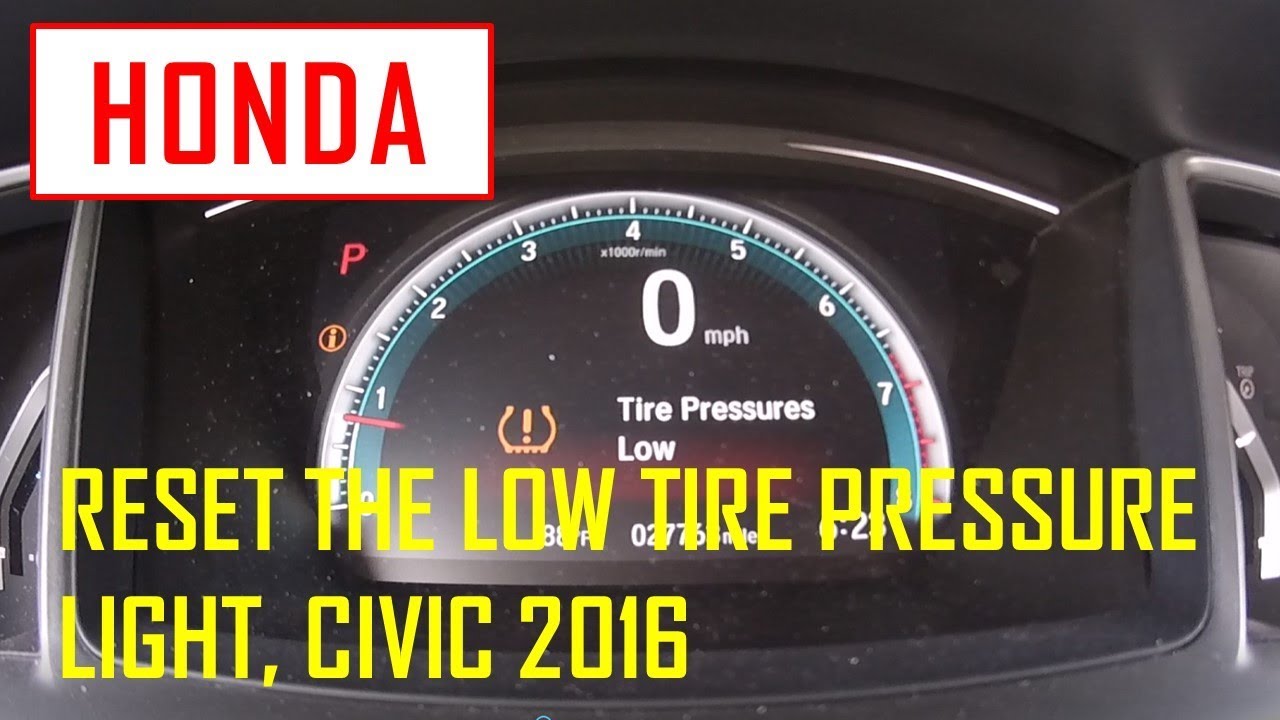
A Honda Civic tire pressure monitor problem is usually caused by incorrect tire pressure, a TPMS calibration issue, a damaged sensor, or a system fault. Check tire pressure first, then recalibrate the TPMS system according to your Civic model.
Across the United States, Honda Civic owners may see a tire pressure monitoring system warning after seasonal temperature changes, tire replacement, puncture repairs, or routine maintenance. The TPMS system is designed to alert drivers when tire pressure is too low or when the monitoring system detects an issue that needs attention.
A tire pressure monitor problem does not always mean a tire is damaged. The warning can come from low air pressure, a sensor battery reaching the end of its service life, incorrect calibration, or communication problems between the sensors and the vehicle computer. The correct fix depends on the warning message, Civic model year, and symptoms.
Source: www.youtube.com > Oil Light Reset
Why Does My Honda Civic Say Tire Pressure Monitor Problem?
A Honda Civic displays a tire pressure monitor problem when the vehicle detects that tire pressure information is missing, inaccurate, or outside the expected range. The system may warn you because of a tire-related issue or because the TPMS system itself needs attention.
The first step is identifying whether the warning indicates low tire pressure or a TPMS malfunction. These two conditions require different solutions.
Source: www.reddit.com
Low tire pressure
A tire may have lost air because of temperature changes, a puncture, a leaking valve stem, or normal air loss over time.
TPMS calibration needed
Some Honda Civic models require recalibration after adjusting tire pressure, rotating tires, or replacing tires.
Sensor or system fault
A damaged sensor, weak sensor battery, wiring issue, or control module problem can trigger a TPMS warning.
How Honda Civic Tire Pressure Monitoring Works
Honda Civic models may use an indirect tire pressure monitoring system that estimates tire pressure changes by measuring wheel speed differences through the vehicle’s anti-lock braking system sensors. Other vehicles may use direct sensors installed inside each wheel.
Because the system type varies by model year and trim level, owners should check the vehicle owner’s manual for the exact TPMS procedure.
Indirect TPMS
Uses wheel rotation data and requires calibration after tire pressure adjustments.
Direct TPMS
Uses individual pressure sensors that transmit tire pressure information to the vehicle.
Common Causes of Honda Civic Tire Pressure Monitor Problems
Most Honda Civic TPMS problems come from a small number of common causes. Checking the simplest possibilities first can often identify the problem without unnecessary repairs.
Source: fourwheelask.com
Incorrect tire pressure
Tires filled below or above the recommended pressure can trigger warnings. Always use the pressure listed on the driver’s door jamb label rather than the maximum pressure printed on the tire sidewall.
Cold weather temperature changes
Air pressure naturally decreases as temperatures drop, which can activate a TPMS warning during colder months.
Recent tire service
A tire rotation, replacement, or repair may require TPMS calibration or sensor relearning depending on the Civic model.
Damaged TPMS components
Wheel impact damage, corrosion, or aging sensor batteries can prevent accurate pressure monitoring.
Symptoms That Indicate a TPMS Issue
The warning behavior can provide clues about the cause. A flashing TPMS light followed by a steady warning often indicates a system malfunction rather than simply low tire pressure.
Steady warning light
Often indicates one or more tires may have incorrect pressure.
Flashing warning light
May indicate a TPMS system fault that requires diagnosis.
How to Fix a Honda Civic Tire Pressure Monitor Problem
The safest troubleshooting process starts with checking tire pressure and then performing a TPMS calibration if required. Avoid replacing sensors before confirming that the warning is not caused by incorrect pressure or calibration.
Source: storage.googleapis.com
Step 1: Check tire pressure
Use a reliable tire pressure gauge when tires are cold and adjust each tire to the recommended pressure shown on the vehicle information label.
Step 2: Inspect tires
Look for visible punctures, damaged valve stems, uneven wear, or signs of slow air leaks.
Step 3: Calibrate the TPMS
Use the vehicle settings or TPMS calibration button if your Civic model includes this function.
Step 4: Drive and confirm
After calibration, drive normally and check whether the warning disappears according to the owner’s manual instructions.
When TPMS Reset Does Not Work
If the warning remains after correct tire inflation and calibration, the issue may require additional diagnosis. A technician can scan the vehicle system and inspect sensors or related components.
Possible sensor failure
A sensor may no longer transmit accurate information because of damage or battery depletion.
Possible leak
A tire that repeatedly loses pressure may have a puncture or valve problem.
Honda Civic TPMS Problems by Situation
The correct solution depends on what happened before the warning appeared. The table below shows common situations and the most useful first action.
Source: www.youtube.com > Oil Light Reset
After filling tires
Calibrate the TPMS system if the warning remains and your Civic requires calibration after pressure changes.
After replacing tires
Confirm that the tires were installed correctly and that TPMS components are compatible with the vehicle.
After cold weather begins
Check pressure because temperature drops can reduce tire pressure enough to trigger warnings.
Common Mistakes to Avoid
Many drivers replace TPMS sensors immediately without checking basic causes. This can lead to unnecessary repair costs.
Ignoring the warning
A TPMS alert may indicate unsafe tire pressure and should be checked promptly.
Using tire sidewall pressure
The tire sidewall maximum is not the same as the recommended vehicle tire pressure.
Resetting without fixing the cause
A reset only clears the warning temporarily if a leak or faulty component remains.
When Should You Get Professional Help?
Professional inspection is recommended when the TPMS warning continues after correct tire inflation and calibration, or when you notice tire damage, repeated pressure loss, or unusual vehicle handling.
Source: www.youtube.com > GillSolutions
Persistent warning
A warning that returns immediately may require diagnostic equipment.
Visible tire damage
Cuts, bulges, or severe tread damage should be inspected before driving further.
Sensor replacement needs
A qualified technician can confirm whether a TPMS sensor actually needs replacement.
Frequently Asked Questions
Q
Why does my Honda Civic say tire pressure monitor problem?
The message can appear because of low tire pressure, incorrect calibration, a tire leak, sensor problems, or a TPMS system fault. Checking tire pressure is the best first step.
Q
How do I reset the tire pressure light on a Honda Civic?
The reset method depends on the model year. Many Honda Civic models require using the vehicle settings menu to start TPMS calibration after tire pressures are corrected.
Q
Can I drive with a Honda Civic TPMS warning light on?
You should check tire pressure as soon as possible. Driving with underinflated tires can affect handling, fuel economy, and tire safety.
Q
How much does Honda Civic TPMS repair cost?
The cost varies depending on whether the issue is a tire leak, calibration problem, sensor replacement, or another electrical issue. Diagnosis should be completed before replacing parts.
Q
Why does my Honda Civic TPMS light come back after reset?
A returning warning usually means the original cause remains, such as a slow leak, incorrect tire pressure, or a faulty TPMS component.
✦ Wrapping Up
Conclusion
A Honda Civic tire pressure monitor problem is usually resolved by checking tire pressure, correcting any tire issues, and completing the proper TPMS calibration procedure. The warning should not be ignored because tire pressure affects vehicle safety and tire performance.
If basic checks do not solve the problem, further inspection can identify whether the issue involves sensors, electronics, or a mechanical tire problem.
💡 Key Takeaway
Start by checking all tire pressures using the recommended values for your Honda Civic, then calibrate the TPMS system if required. If the warning returns, schedule a professional inspection.



![Why Is Your Honda Civic Tire Pressure Low? [Causes & Fixes!]](https://lh6.googleusercontent.com/uf-HX4B8lk_T55uCQlhN1zXi_ugWrr1iv07BBb9zBobjOqz5P0pouhCIqvisuW3puft1G-KMqZByWU0C2mxVLJ6f77hDd_E_o75vsFDFB0tDfwbf-Mx1JWa-LwBUaoiBb4BkK3lcP0IDzlwZJhT9J5s "Why Is Your Honda Civic Tire Pressure Low? [Causes & Fixes!]")