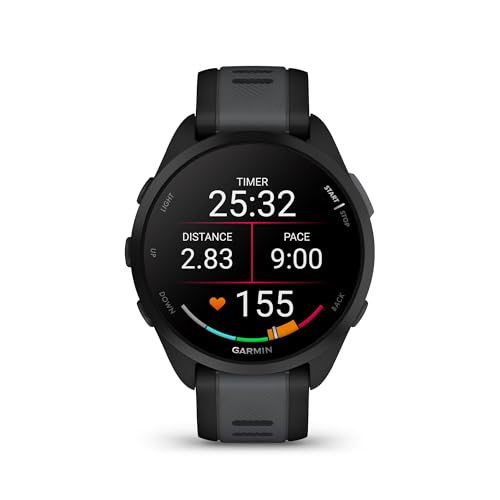
The Garmin Forerunner 970 is my top pick for runners who need serious trail data, maps, and battery life.
A trail run can change fast. One minute, you are cruising through a pine forest; the next, your phone has no signal and the path splits. The best smartwatch for trail running helps you track distance, pace, heart rate, elevation, weather, and route direction without slowing you down. I looked at GPS tools, training features, comfort, battery needs, and real-world trail use. This guide covers Garmin, Apple, and budget options, so you can choose a watch that fits your route, phone, fitness goals, and budget.
Garmin Forerunner 165

The Garmin Forerunner 165 is a light and simple running watch for trail runners who do not need a large outdoor case. Its bright AMOLED screen makes pace, heart rate, and workout time easy to read in shade or sun. The 43mm case sits well on smaller and medium wrists. I also like the physical buttons, because they are easier to use when rain or sweat makes the screen less responsive.
This watch gives you GPS activity tracking, elevation data, recovery information, sleep tools, and Garmin Coach support. It is not as advanced as the Forerunner 970 for maps or long ultra races, but it covers the needs of most daily trail runners. The battery is suitable for regular runs and training weeks, though serious racers should compare GPS battery modes before a long event. For many athletes, this is the best smartwatch for trail running at a sensible price.
Pros:
- Light 43mm design feels comfortable on long runs
- Bright AMOLED display is clear in poor light
- Accurate GPS tracking for daily trail routes
- Useful heart rate, sleep, and recovery data
- Simple buttons help during wet or sweaty runs
- Garmin Coach supports structured training
Cons:
- Advanced mapping features are limited
- Battery life is not ideal for the longest ultras
- Some premium training tools are missing
My Recommendation
The Forerunner 165 suits beginners, road runners who are adding trails, and athletes who want a smaller watch. It gives you the core tools that matter most: GPS, elevation, pace, heart rate, and recovery feedback. I would choose it for short and medium trail runs, weekly hill workouts, and general fitness. It offers strong value and is usually easier to find at a lower price than Garmin’s premium models.
Garmin Forerunner 970

The Garmin Forerunner 970 is built for runners who want a high level of training detail and navigation. Its 47mm size gives the display enough room for maps, route lines, metrics, and alerts. The titanium bezel adds a premium feel without turning the watch into a bulky outdoor brick. I see it as a serious tool for marathoners, mountain runners, and athletes who plan their training around data.
Trail runners benefit from advanced GPS, elevation tracking, training load features, recovery guidance, and navigation support. The display is easy to check while moving, and the watch can help you follow a planned course instead of guessing at every fork. Its larger body may feel big on a small wrist, so fit matters. If you want one watch for racing, training, maps, and daily use, this is my leading premium choice for the best smartwatch for trail running.
Pros:
- Large display supports easier map and data viewing
- Strong GPS tools for complex trail areas
- Advanced training and recovery insights
- Premium titanium construction feels durable
- Excellent choice for long-distance racing
- Useful elevation data for climbs and descents
Cons:
- High price may exceed casual runners’ budgets
- 47mm case can feel large on small wrists
- Many features require time to learn
My Recommendation
I recommend the Forerunner 970 for experienced trail runners, ultramarathon athletes, and people who want premium navigation and training analysis. It is especially useful when routes are long, steep, or unfamiliar. The watch gives you room to grow as your goals become more serious. Its cost is high, but the feature set and build quality make it a strong long-term investment when it is available at a good Amazon price.
Garmin Forerunner 265

The Garmin Forerunner 265 remains a very balanced choice for runners who want a colorful AMOLED screen and strong training features. Its 46mm case gives the display a clear layout for pace, lap time, heart rate, and elevation. The menu system feels friendly after a short learning period. I found the combination of physical controls and touch access useful when switching screens on a trail.
This model tracks running workouts, supports multi-band GPS in suitable conditions, and provides useful training readiness information. It does not offer the same premium navigation experience as the 970, but it performs well for marked trails and routes loaded from a phone. Battery needs depend on GPS mode, screen settings, and notification use. For runners who want a full-featured watch without the top price, the 265 is one of the smartest choices in this review.
Pros:
- Bright AMOLED screen has strong color and contrast
- Detailed running and recovery tools
- Reliable GPS performance for most trail runs
- Good balance of price and advanced features
- Comfortable for daily wear and training
- Supports music and phone notifications
Cons:
- Large case may not suit narrow wrists
- Battery drops faster with bright screen settings
- Mapping is less advanced than premium Garmin models
My Recommendation
The Forerunner 265 is best for regular runners who want more than basic tracking. It fits athletes who run trails several times each week but do not need the most advanced expedition features. I especially like it for hill repeats, race preparation, and mixed road-and-trail training. It is a strong value option for anyone searching for the best smartwatch for trail running without paying for every premium feature.
Apple Watch Ultra 3

The Apple Watch Ultra 3 is a rugged smartwatch for iPhone users who want fitness tools, safety features, and smart functions in one device. Its 49mm titanium case feels solid, while the large screen makes route details and workout metrics easy to see. The Trail Loop is designed for quick adjustment, which helps when your wrist changes size during a long run. Its action controls can also reduce the need to swipe through menus.
For trail use, the Ultra 3 offers GPS tracking, compass functions, workout data, health monitoring, and route support through compatible apps. Cellular service can help with calls and messages where a carrier signal exists, but it should not replace a planned safety system. Battery life can be strong for a smartwatch, yet dedicated Garmin models may last longer in some GPS situations. I recommend it as the best smartwatch for trail running for Apple users who also want a polished daily smartwatch.
Pros:
- Rugged titanium case suits demanding outdoor use
- Large and bright display is easy to read
- Excellent health and fitness ecosystem
- Useful emergency and communication features
- Action button helps start workouts quickly
- Comfortable Trail Loop adjusts with ease
Cons:
- Requires an iPhone for full use
- Large 49mm case may feel heavy to some runners
- Battery may not match dedicated ultra-running watches
My Recommendation
Choose the Apple Watch Ultra 3 if you use an iPhone and want one device for trails, calls, health, music, and daily life. It is a great fit for runners who value safety tools and a bright screen as much as training metrics. It is less appealing for Android users or athletes who need the longest possible GPS battery. Availability and cellular pricing can vary, so check the current Amazon listing before buying.
Military Fitness Smartwatch for Men

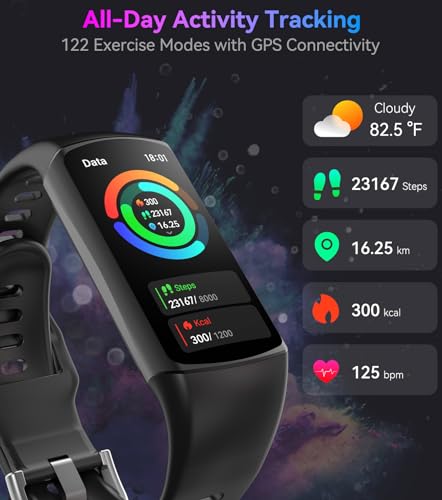
This budget fitness smartwatch targets users who want basic health and phone features at a lower cost. It includes tools such as heart rate tracking, step counting, sleep data, SpO2 readings, and workout modes. The design looks more rugged than a slim lifestyle watch. That style may appeal to walkers, gym users, and casual runners who prefer a larger face.
For trail running, this watch can help record simple workouts and monitor general activity. Still, I would treat its GPS, route guidance, water rating, and health data as basic unless the current listing clearly confirms a feature. It is not the same class as a dedicated Garmin or Apple outdoor watch. For a short run near home, it may be useful, but I would not make it my first choice for remote trails or races.
Pros:
- Usually costs less than premium running watches
- Includes many basic fitness tracking tools
- Works with Android phones and iPhones
- Call and notification functions add daily value
- Rugged styling suits outdoor users
- Large screen can be easy to read
Cons:
- Trail navigation may be limited or unavailable
- GPS accuracy may vary by route and conditions
- Health readings are not medical measurements
My Recommendation
This watch is best for budget shoppers who want step, sleep, heart rate, and phone features more than advanced trail data. I would choose it for neighborhood paths, short park runs, and general fitness. I would not rely on it as the best smartwatch for trail running in remote areas. Confirm the exact battery, GPS, water, and app features on the current product page before ordering.
Garmin Forerunner 965

The Garmin Forerunner 965 is a premium running watch with a large AMOLED display and a strong set of training features. Its 47mm case gives trail data enough space without feeling as bulky as many adventure watches. The screen makes colors, route lines, and data fields stand out. I also like that the watch remains light enough for daily wear, which matters when training is part of every day.
The 965 supports detailed running metrics, navigation, elevation data, recovery guidance, and multiple GPS modes. It is a strong match for trail races, mountain training, and runners who often follow downloaded courses. Garmin’s battery performance is one of its biggest advantages, although exact runtime changes with GPS mode and screen use. If you find it at a good price, it remains a highly capable best smartwatch for trail running in 2026.
Pros:
- Bright AMOLED screen improves route visibility
- Full training and recovery feature set
- Strong battery for long training sessions
- Useful maps and breadcrumb-style navigation
- Light design for a premium running watch
- Excellent support for multi-sport athletes
Cons:
- Premium price is not ideal for beginners
- Many metrics can feel overwhelming at first
- Touch controls may need care in heavy rain
My Recommendation
The Forerunner 965 is best for committed runners who want advanced tools but do not need the newest model. It is a smart pick for ultramarathon training, mountain races, and athletes who review data after every run. The large screen and long battery are its strongest trail benefits. It offers excellent value when discounted and remains a serious alternative to newer premium models.
zhizhi Fitness Tracker Smartwatch

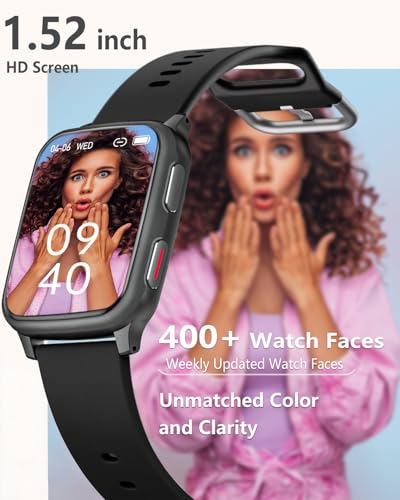
The zhizhi fitness tracker is a low-cost smartwatch aimed at basic activity tracking and phone convenience. It lists features such as heart rate monitoring, running modes, Bluetooth calling, step tracking, sleep tools, and water resistance. The broad phone compatibility is useful for households that use different devices. Its large watch face also gives it a clear, casual look for daily wear.
I see this model as an entry point rather than a dedicated trail navigation tool. It may work for tracking a short run, but serious runners should confirm whether the watch uses built-in GPS or depends on a connected phone. I would also check the listed water rating and app quality before taking it into storms. It can be a practical low-cost fitness watch, but it is not my choice for the best smartwatch for trail running.
Pros:
- Low purchase cost suits first-time users
- Supports common Android and iPhone connections
- Includes calling and notification functions
- Tracks steps, sleep, and heart rate
- Large display is simple to view
- Useful for casual daily fitness
Cons:
- Built-in GPS details may be limited
- Route navigation is not its main strength
- App accuracy and support may vary
My Recommendation
I recommend the zhizhi watch for casual runners, walkers, and shoppers who want a low-cost introduction to smartwatch features. It is most useful on familiar paths where you can carry a phone for maps and safety. It does not replace a Garmin for remote trails, long events, or serious training analysis. Read the current listing carefully because included functions and compatibility can change.
Garmin Forerunner 265 Whitestone

The Whitestone and Tidal Blue Forerunner 265 offers the same core platform as the black version, but its lighter color gives it a fresh look. The 46mm case provides a generous screen for workout fields and alerts. Its AMOLED panel is bright without making the watch feel like a phone on your wrist. I find this style appealing for runners who want a training watch that also looks clean at work.
Trail runners get GPS tracking, heart rate data, elevation information, training status, recovery tools, and workout planning. The watch handles mixed training well, so you can move from road miles to forest climbs without changing ecosystems. Its colorful screen is pleasant, though a darker screen setting may help preserve battery. This model is a strong best smartwatch for trail running choice for athletes who want Garmin performance in a lighter color.
Pros:
- Clear AMOLED screen works well in low light
- Reliable running and training platform
- Good GPS tools for daily trail use
- Comfortable band and light overall feel
- Strong recovery and sleep information
- Stylish Whitestone and Tidal Blue finish
Cons:
- Light finish may show dirt from trail use
- Case is larger than the 265S version
- No premium expedition-level mapping
My Recommendation
This version is best for runners who want the 265 feature set with a brighter, sportier appearance. It suits daily trail training, road races, gym work, and people who wear the watch all day. The color is easy to match but may need more cleaning after muddy runs. If the price is close to the darker version, choose based on style and availability.
Garmin Forerunner 265S

The Garmin Forerunner 265S is the smaller member of the 265 family. Its 42mm case is a better match for narrow wrists, smaller runners, and anyone who dislikes a watch that shifts during descents. The bright screen still gives you useful room for pace, time, heart rate, and elevation. I appreciate the smaller fit because comfort can matter more than one extra feature on a three-hour trail run.
The 265S offers much of the same training experience as the larger 265, including GPS activity tracking, recovery tools, sleep monitoring, and structured workouts. The smaller case may mean less battery capacity, so check the current specifications if you plan ultra-distance events. It is excellent for short and medium trail runs, especially when secure fit is your main concern. For smaller wrists, this may be the best smartwatch for trail running in the group.
Pros:
- Compact 42mm case suits smaller wrists
- Less movement during fast downhill sections
- Bright AMOLED display is easy to read
- Strong training and recovery features
- Useful GPS and elevation tracking
- Light feel supports all-day comfort
Cons:
- Shorter battery potential than larger models
- Smaller screen shows fewer data fields
- Premium price may surprise casual runners
My Recommendation
I recommend the 265S to smaller athletes and runners who want a close, stable fit. It is also a good option for people who find 47mm watches distracting or heavy. The compact body does not remove the important running tools, but it may be less suitable for multi-day races. Choose it when comfort and fit come before the biggest possible screen.
Garmin Forerunner 165 Music

The Garmin Forerunner 165 Music adds offline music support to the already approachable Forerunner 165 design. That feature lets you leave your phone behind on many runs, which feels freeing on quiet trails. The 43mm case is light, and the AMOLED display gives the watch a modern look. Turquoise adds a bright color for runners who want something less plain than black or gray.
Its core trail tools include GPS tracking, pace, distance, elevation, heart rate, and recovery information. Music playback can make long climbs feel shorter, but remember that headphones can reduce awareness near roads, cyclists, or wildlife. The watch is best for everyday trails and moderate training rather than remote ultra events. If music matters to you, this is a strong value pick for the best smartwatch for trail running.
Pros:
- Offline music reduces the need to carry a phone
- Light 43mm design suits daily running
- Bright AMOLED display reads well outdoors
- Useful GPS, heart rate, and elevation data
- Good sleep and recovery tracking
- Colorful Turquoise finish stands out
Cons:
- Limited navigation compared with premium models
- Music use can reduce battery life
- Bright color may not suit every user
My Recommendation
The Forerunner 165 Music is best for runners who want simple Garmin training tools and phone-free audio. It suits park trails, forest paths, daily workouts, and runners who enjoy a lighter watch. I would not choose it for advanced mountain navigation or very long unsupported races. For most recreational trail runners, it offers an enjoyable mix of comfort, music, and useful data.
How I Choose a Trail Running Smartwatch
Trail running asks more from a watch than a flat road run. Trees can weaken satellite signals, hills can change pace, and weather can turn a short route into a safety problem. I look beyond screen color and smart notifications. The best smartwatch for trail running must help you understand where you are, how hard you are working, and how much energy you have left.
GPS Accuracy and Route Tracking
GPS is the heart of a trail watch. A good model records your path with fewer sharp jumps and missing sections. Multi-band or multi-system GPS can help in difficult areas, but tree cover, cliffs, and deep valleys still affect signals. I prefer a watch that starts GPS quickly, holds the route well, and lets me review the track after the run.
Route guidance also matters. A simple breadcrumb line can prevent a wrong turn, while full maps make unfamiliar routes easier to follow. If you run known local trails, basic course guidance may be enough. If you explore alone, pay more for better navigation.
Battery Life
Battery claims often depend on settings. GPS mode, screen brightness, music, cellular use, and sensors all change runtime. A watch that lasts for many days as a normal smartwatch may last far less during continuous GPS tracking. I always compare the advertised GPS time with the length of my longest planned run.
For short runs, most models in this guide have enough power. For ultras, choose a watch with a clear GPS battery advantage and a low-power mode. Charge the watch before a long outing, and carry a small safety light or backup plan when the route is remote.
Elevation and Hill Data
Distance alone does not explain trail effort. A three-mile route with 1,500 feet of climbing can feel harder than a flat ten-mile run. An altimeter or reliable elevation estimate helps you understand climbs, descents, and total gain. This data also makes your training more useful because you can compare similar hill routes over time.
Elevation readings are not perfect. Weather and pressure changes can affect barometric sensors, while GPS elevation can drift. I use the data as a guide rather than treating every number as exact.
Heart Rate and Training Feedback
Wrist heart rate can help you avoid starting a steep climb too fast. It can also show how your body responds to heat, poor sleep, and long climbs. A chest strap usually gives better data during quick changes in effort, but a good watch sensor works well for many steady runs.
Training load and recovery tools can turn a pile of numbers into useful advice. These tools do not know every detail of your life, so I use them with common sense. If you feel sick or unusually tired, listen to your body before obeying a watch prompt.
Screen and Controls
A bright screen is helpful in shade, but trail runners should not stare at it while moving. Physical buttons are valuable in rain, cold, and muddy conditions. Touch controls feel fast during normal use but can be harder with gloves or wet fingers.
A smaller watch may fit better but show less data. A larger watch may make maps easier to read but move more on a small wrist. I suggest wearing the watch snugly above the wrist bone. The best fit is the one you forget during the run.
Safety Features
A smartwatch is not a rescue service. Cellular features need carrier coverage, and satellite tools may have limits. Before a remote run, tell someone your route, carry water, pack a light, and know how to get back. Use emergency contacts and incident detection when supported, but do not depend on them as your only safety plan.
Best Features at a Glance
| Best for | Why |
|---|---|
| Premium trail training | Garmin Forerunner 970 offers advanced data, navigation, and a large display. |
| Most runners | Garmin Forerunner 265 balances GPS, training tools, comfort, and price. |
| iPhone users | Apple Watch Ultra 3 adds rugged hardware, health tools, and smart features. |
Trail Running Watch Buying Tips
Match the Watch to Your Route
A city park trail has different needs from a remote mountain route. On a familiar loop, pace, heart rate, and elevation may be enough. On an unknown route, maps and dependable course guidance become more important. Think about the places you actually run instead of buying features you will never use.
Check Phone Compatibility
Apple Watch models work best with iPhone users. Garmin watches support both major phone platforms, but some features may depend on the Garmin app and phone settings. Budget watches can claim broad compatibility, yet the quality of their apps may vary. Confirm compatibility before you place the order.
Do Not Confuse Water Resistance With Waterproofing
Water ratings describe controlled conditions. They do not mean a watch can handle every river crossing, hot shower, or deep dive. Salt water, soap, impact, and aging seals can reduce protection. After a muddy run, rinse the watch with fresh water if the manufacturer allows it and dry it before charging.
Think About Data Fields
Too much data can distract you. I usually keep the main screen simple: elapsed time, distance, current heart rate, and elevation. I use another screen for climb details and navigation. A watch with many fields is useful only if you can read them quickly.
Consider Music and Phone-Free Runs
Music storage can make a watch more useful. It reduces the need to carry a phone on a short trail run. Still, keep awareness high in places with bikes, cars, horses, or wildlife. I prefer low volume or one-ear listening when I run outside.
FAQs Of best smartwatch for trail running
What is the best smartwatch for trail running?
For most serious runners, I recommend the Garmin Forerunner 970. It combines strong GPS, elevation data, training tools, navigation, and a large display. The Forerunner 265 is a better value for many runners, while the Apple Watch Ultra 3 is best for iPhone users who want smart and safety features.
Is Garmin or Apple better for trail running?
Garmin usually offers longer battery options and deeper running tools. Apple offers excellent health features, apps, communication, and a bright rugged design. Your phone matters most: Apple Watch is designed for iPhone users, while Garmin works across Android and iPhone ecosystems.
Do I need maps on a trail running watch?
You do not need maps for every run. A breadcrumb route can work on familiar trails. Full maps become valuable when you explore new areas, run in poor weather, or face many trail junctions.
Can a smartwatch replace a phone during a trail run?
Sometimes, but not always. A watch with music, GPS, and cellular service can handle many daily needs. Coverage, battery, and emergency limits still apply, so I carry a phone or safety device on remote routes.
How accurate is wrist heart rate on a trail?
Wrist heart rate can be useful during steady efforts. It may become less accurate with loose fit, cold skin, rapid pace changes, or arm movement. For precise training, use a compatible chest strap and treat the watch reading as helpful guidance.
Final Verdict: Which Should You Buy?
The Garmin Forerunner 970 is my top pick for the best smartwatch for trail running because it offers excellent navigation, training data, elevation tools, and premium build quality. The Forerunner 265 gives most runners better value, while the Apple Watch Ultra 3 is ideal for iPhone users.
Choose your watch by route length, wrist size, phone, and battery needs. The right trail running smartwatch should feel like a quiet guide: useful when needed, and easy to forget when the trail takes over.