A typical digital voice recorder can record from a few hours to several hundred hours, depending on bitrate, storage, and format.
I’ve worked with audio gear and tested many recorders, so I know exactly how long can a voice recorder record and what limits that runtime. This guide breaks down every factor that affects recording length, gives real-world examples, and shares practical tips to get the most recording time from any device. Read on to pick the right settings and avoid surprises when you need to capture long meetings, interviews, or lectures.
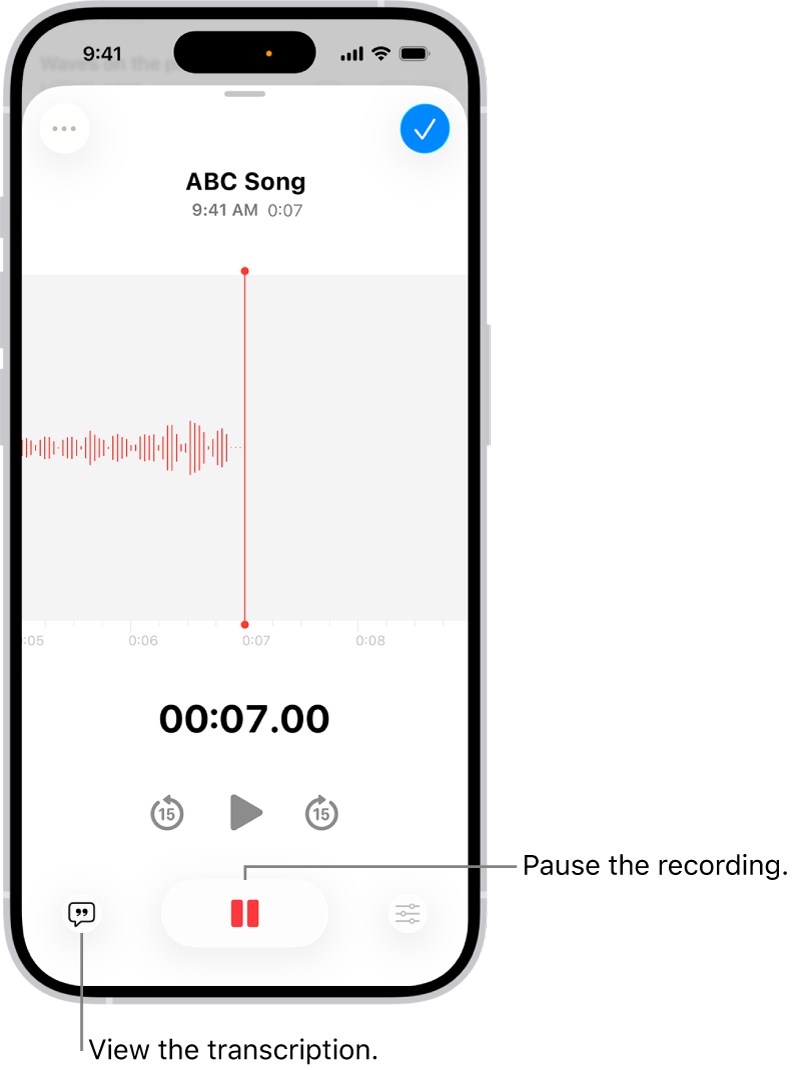
How recording length is defined and why it matters
When people ask how long can a voice recorder record, they mean how many hours or minutes it can capture audio before storage or power runs out. Recording length depends on three main things:
- Storage capacity on the device or card.
- Audio format and bitrate you choose.
- Battery life and the device’s firmware limits.
Why it matters: longer recordings let you capture full events without interruption. But long files can be large and may be harder to manage. Understanding trade-offs helps you plan and pick the right recorder and settings.
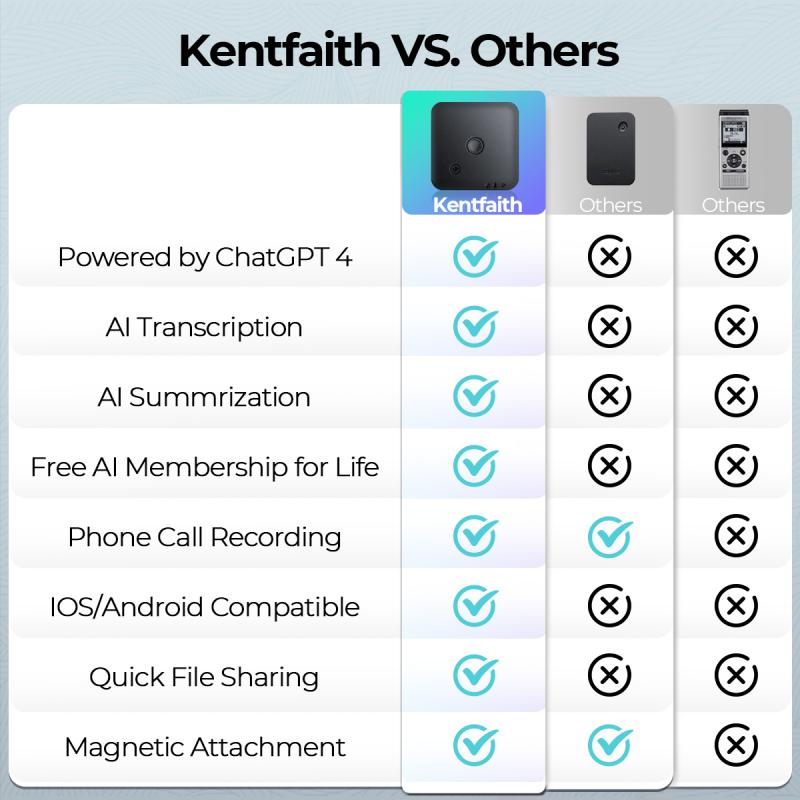
Types of voice recorders and typical runtimes
Different recorders serve different needs. Here’s a quick look at common types and how long can a voice recorder record for each type.
- Dedicated digital voice recorders
- Typical: small built-in storage 4GB–32GB. At low bitrates they can record tens to hundreds of hours.
- Professional handheld recorders
- Typical: support WAV and high-bitrate formats. They record far fewer hours but deliver higher audio fidelity.
- Smartphones (voice memo apps)
- Typical: limited by phone storage and battery. Can record many hours, but apps may impose file or time limits.
- USB or desktop dictation units
- Typical: designed for long dictation sessions; often use external power and large storage.
In short, how long can a voice recorder record varies by device class. A simple 16GB recorder in low-quality MP3 can do hundreds of hours. A high-quality WAV file on the same storage may only last a day.
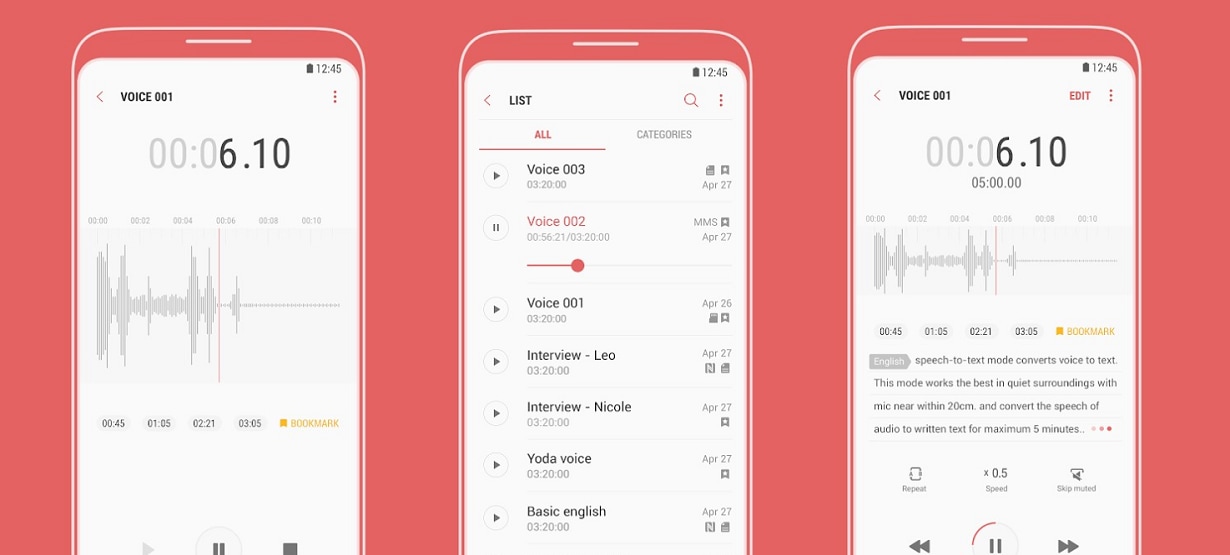
File formats, bitrates, and how they change recording time
Audio format and bitrate are the biggest levers that change recording length. Lower bitrate = smaller files = longer recordings. Higher bitrate = better quality = shorter recordings.
Common formats and examples:
- MP3 at 64 kbps mono
- Good for speech. Uses roughly 0.5 MB per minute. A 16GB device records ~560–600 hours.
- MP3 at 128 kbps stereo
- Better clarity. Uses about 1 MB per minute. A 16GB device records ~280–300 hours.
- WAV (16-bit, 44.1 kHz, stereo)
- CD-quality. Uses about 10 MB per minute. A 16GB device records ~25–30 hours.
- Lossless formats (FLAC)
- Smaller than WAV but larger than MP3. Expect roughly 40–60% of WAV size.
How long can a voice recorder record in a given format? Do the math: storage (MB) ÷ bytes per minute ≈ minutes of recording. Manufacturers sometimes publish charts that make this easy to follow.
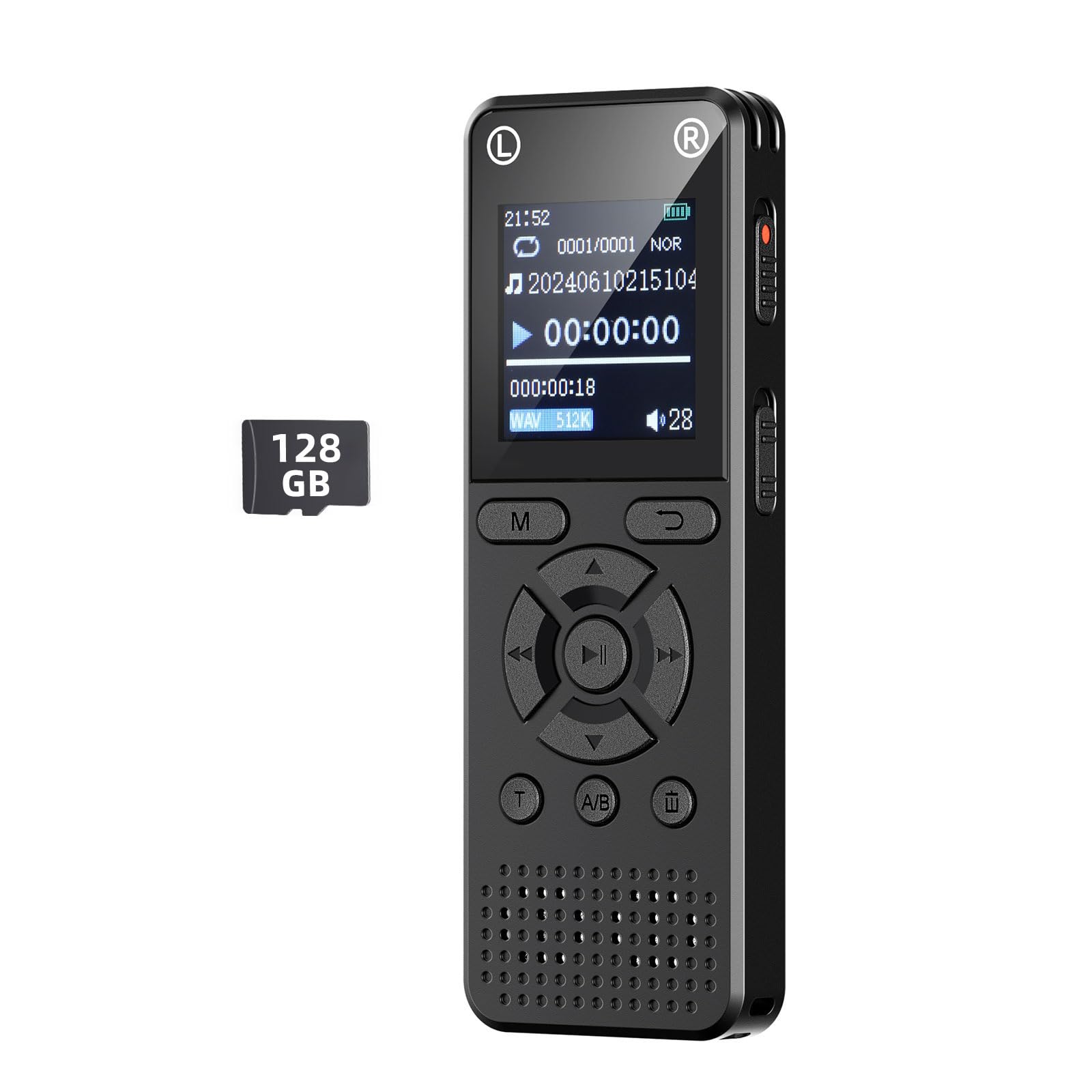
Storage, file system limits, and practical constraints
Storage space is one thing. File system limits and device firmware are others. Pay attention to these practical constraints when you ask how long can a voice recorder record.
- File system limits
- Older devices use FAT32 and may split files at 2–4 GB. That can break a continuous recording into chunks.
- Built-in memory vs microSD
- MicroSD lets you expand storage cheaply. Swap cards during long sessions if supported.
- Folder and file count
- Some recorders limit the number of files in a folder or total files overall.
- Reliability
- Very long recordings risk corruption if power fails. Frequent check-ins and backups reduce risk.
Plan for redundancy on long sessions: use external power, larger cards, and periodic file checks.
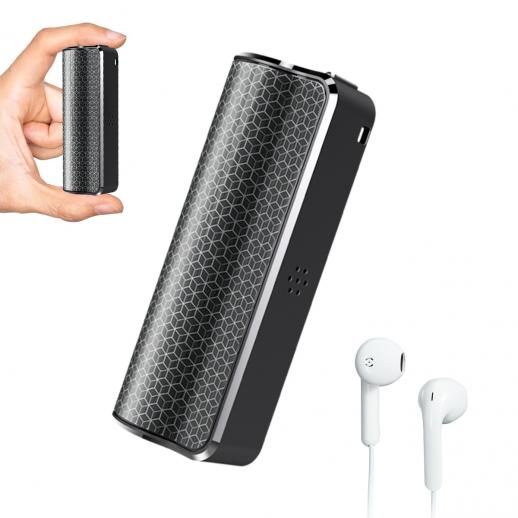
Battery life and power management
Battery life often ends long sessions before storage does. When considering how long can a voice recorder record, check both storage and battery specs.
Factors that affect battery life:
- Screen on vs off, backlight use
- Active features: noise reduction, microphone preamps, Bluetooth
- Recording format and CPU use
- Battery type: alkaline vs NiMH vs lithium-ion
Practical numbers:
- Small recorders: 10–20 hours on alkaline batteries.
- High-end units: 12–30 hours depending on settings and battery capacity.
- Smartphones: often 4–12 hours continuous due to screen and CPU load.
Extend battery life by turning off unnecessary features, lowering screen brightness, using external power banks, or carrying spare batteries.

Tips to extend recording time and avoid failures
If you need to maximize how long can a voice recorder record, use these practical steps I’ve learned from fieldwork.
- Choose a lower bitrate or mono for speech-focused recordings.
- Use a high-capacity microSD card rated for continuous recording.
- Turn off Wi-Fi, Bluetooth, and extra processing features.
- Use external power or swap batteries during long sessions.
- Record in segments intentionally, such as 2-4 hour chunks, to reduce file corruption risk.
- Test your setup before important recordings. I once missed a full seminar because I trusted default settings; now I run a short trial first.
These steps help you achieve reliable, long-duration recordings with minimal hassle.
Real-world examples and calculations
Here are concrete examples to make how long can a voice recorder record more tangible.
- Example 1: 8GB recorder at MP3 64 kbps mono
- Approx. 280–300 hours. Great for note-taking, long interviews, and surveillance-style recording.
- Example 2: 16GB recorder at WAV 16-bit stereo
- Approx. 25–30 hours. Best for high-quality interviews and music.
- Example 3: Smartphone with 64GB free space at voice memo app (128 kbps)
- Approx. 740–800 hours, but battery may die after 8–12 hours of continuous use.
These examples show the wide range. Always convert storage and bitrate into minutes to confirm what you need.

Legal, privacy, and ethical considerations
Knowing how long can a voice recorder record is only part of the story. You must also consider laws and ethics.
- Consent
- Some regions require two-party or one-party consent to record. Check local laws.
- Privacy
- Long unattended recordings may capture sensitive data. Secure files and limit access.
- Storage security
- Use encryption or secure backups for sensitive recordings.
Being aware of these rules protects you and your subjects and limits legal risk.
Choosing the right recorder for your needs
To pick a recorder that answers how long can a voice recorder record for your use case, ask these questions:
- Do you need high audio fidelity or just clear speech?
- Will you record continuously for hours or just short sessions?
- Is portability or battery life more important?
- Do you need expandability with microSD?
- What’s your budget?
Match answers to device specs. For lectures and meetings, prioritize battery and storage. For interviews or music, prioritize quality.
My experience and common mistakes to avoid
From years of field recording, I learned a few lessons about how long can a voice recorder record.
- Test the full chain before an event. I once assumed a 32GB card was empty and missed part of an event due to a hidden firmware file.
- Don’t trust battery percentage alone. Carry spares or an external power bank.
- Avoid maxing out bitrate if you need long hours. I often record interviews at 96 kbps mono — the voice is clear and files remain manageable.
These small steps save time and stress during real sessions.
Frequently Asked Questions of how long can a voice recorder record
What determines how long a voice recorder can record?
Storage capacity, audio format/bitrate, and battery life are the primary factors. Device firmware and file system limits also play a role.
Can I record for days straight on a digital voice recorder?
Possibly, if you have ample storage and continuous power. Firmware or file splitting may interrupt recordings, so plan backups and checks.
Does recording in mono extend recording time?
Yes. Mono files use roughly half the data of stereo at the same bitrate, roughly doubling recording time for speech-focused tasks.
Will a smartphone record longer than a dedicated recorder?
Smartphones can store more but often have shorter battery life and potential app limits. Dedicated recorders may be more reliable for long continuous sessions.
How can I prevent file corruption during long recordings?
Use reliable storage cards, keep the device powered, record in manageable segments, and avoid removing power mid-write. Regularly test recordings to confirm integrity.
Conclusion
You now know how long can a voice recorder record and what factors control that runtime. Storage, format, and battery are the key levers. Use lower bitrates and larger cards for long sessions, carry spare power, and test your setup first. These steps will keep your recordings safe and complete.
Take action now: check your device settings, run a short test recording with your planned setup, and pick the right card or power solution. If you found this helpful, leave a comment about your recorder or subscribe for more practical audio tips.