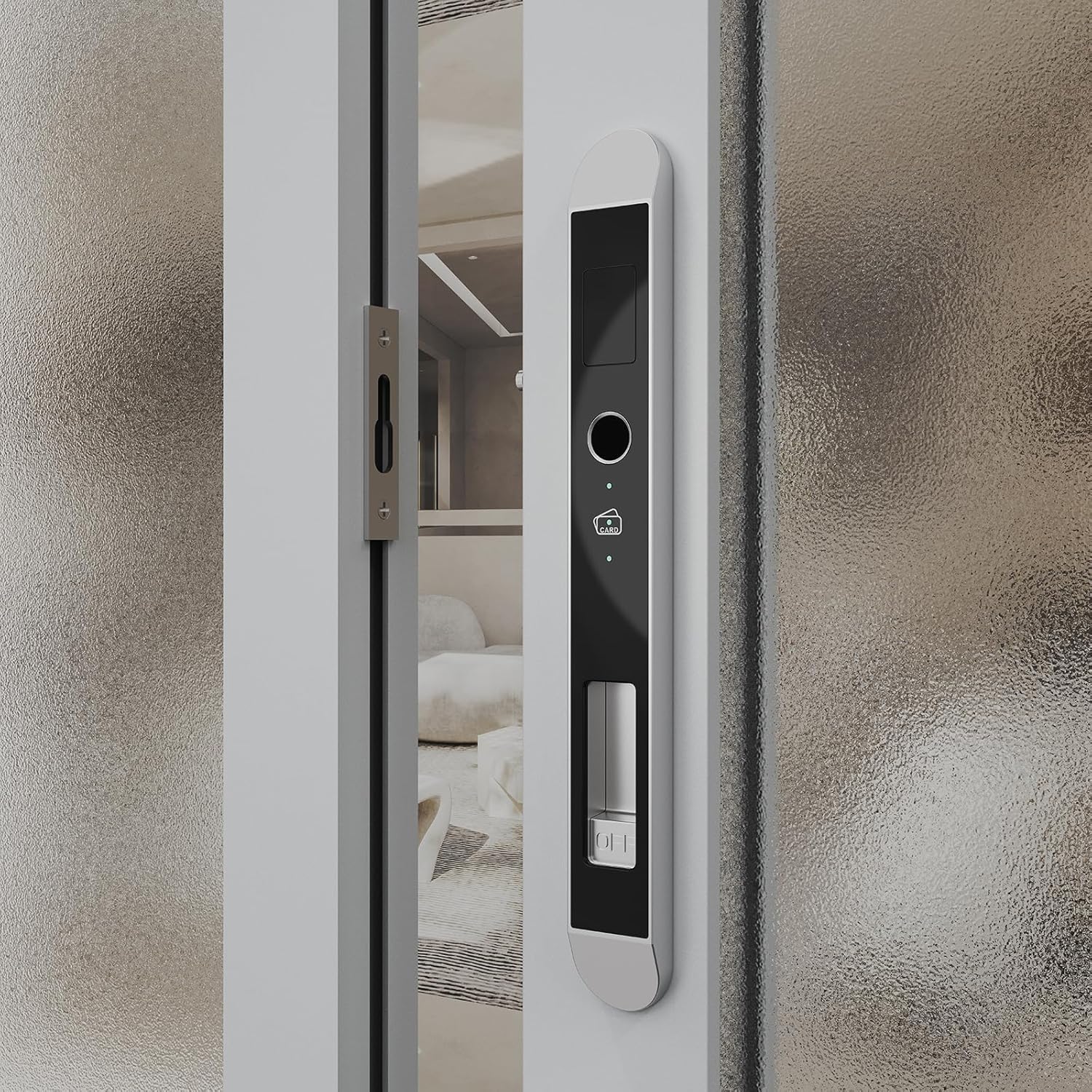
Installing a smart lock on a sliding door requires checking door compatibility, choosing a lock designed for sliding mechanisms, mounting the hardware correctly, connecting the app, and testing the lock before daily use.
In the United States, many homes use sliding glass patio doors as entrances to backyards, decks, balconies, and outdoor living areas. A sliding door smart lock can add keyless access, remote control features, and improved monitoring, but installation is different from replacing a standard front-door deadbolt because sliding doors use tracks, rollers, and latch systems rather than traditional lock cylinders.
A successful sliding door smart lock installation starts with measuring the existing door hardware and confirming compatibility. Some smart locks replace the existing latch, while others attach as an additional security device. Following the manufacturer’s instructions is essential because incorrect alignment can prevent the door from locking properly or damage the frame and hardware.
Source: Bing
What Is a Sliding Door Smart Lock?
A sliding door smart lock is an electronic locking device designed specifically for sliding doors. Unlike a traditional deadbolt that moves into a strike plate on a swinging door, sliding door locks usually secure the moving panel by engaging with a latch, clamp, bolt, or track-mounted mechanism.
These locks may provide features such as keypad entry, smartphone control, temporary access codes, automatic locking, and integration with smart home systems. The available features depend on the specific lock model and whether the door hardware supports replacement or retrofit installation.
Source: Bing
Sliding glass patio doors
Common in US homes, these doors often require specialized smart locks because their locking points differ from standard entry doors.
Retrofit smart locks
These attach to existing hardware and may require less modification than complete lock replacements.
Replacement smart locks
These replace existing locking components but usually require closer measurement and compatibility checks.
How Sliding Door Smart Locks Work
A sliding door smart lock uses electronic controls to activate or monitor the locking mechanism. Depending on the design, the motor or electronic actuator may move a locking component, while sensors confirm whether the door is closed or locked.
Access control
Users can unlock the door through a keypad, mobile app, or connected smart home system.
Before Installing a Smart Lock on a Sliding Door
Preparation reduces installation problems. Before starting, inspect the sliding door condition, measure the hardware, and confirm that the selected smart lock is designed for your door style.
A smart lock may not work correctly on a door with damaged rollers, excessive movement, loose frames, or a misaligned latch. Fix mechanical problems before adding electronic hardware.
Source: Bing
Check door compatibility
Verify door thickness, latch position, opening direction, and included hardware requirements.
Prepare tools
Common tools include a screwdriver, measuring tape, drill if required by the model, and batteries or charging equipment.
Read manufacturer instructions
Installation steps vary between smart lock designs, so the product manual should guide final mounting decisions.
Signs Your Sliding Door Needs Repair First
A sliding door should move smoothly and close fully before installing a smart lock. Locking problems caused by alignment issues often remain after installation if the original door problem is not corrected.
Hard to slide
Dirty tracks or worn rollers can prevent proper closing.
Latch does not align
A lock may fail if the door does not meet the locking point correctly.
How to Install a Sliding Door Smart Lock Step by Step
The exact installation process depends on the smart lock design, but most sliding door smart locks follow a similar sequence: remove existing hardware if required, attach the smart lock components, align the mechanism, connect power, and complete setup through the companion app.
Work carefully during installation because forcing components into position can damage the door, frame, or lock assembly.
Source: Bing
Step 1: Remove existing lock hardware
Remove only the parts specified in the installation manual and keep screws or components that may be needed later.
Step 2: Mount the smart lock
Attach the lock body or adapter according to the manufacturer’s mounting instructions.
Step 3: Align the locking mechanism
Check that the lock engages smoothly without resistance when the door closes.
Step 4: Install batteries and connect the app
Complete pairing, create access codes if available, and configure settings.
Step 5: Test operation
Lock and unlock the door several times from inside and outside before relying on it.
How to Know the Installation Was Successful
A properly installed sliding door smart lock should operate smoothly, maintain secure alignment, and respond consistently to keypad, app, or manual controls.
Smooth locking
The lock engages without forcing the door.
Reliable connectivity
The smart lock communicates correctly with its app or connected system.
Common Sliding Door Smart Lock Installation Problems
Most installation issues come from compatibility problems, poor alignment, power issues, or incorrect setup. Checking the simplest causes first can save time and prevent unnecessary adjustments.
Source: Bing
Lock does not engage
Check door alignment, latch position, and whether the lock hardware matches the door design.
App cannot connect
Confirm battery level, Bluetooth or Wi-Fi requirements, and follow the manufacturer’s pairing process.
Door feels difficult to operate
Inspect rollers, tracks, and hardware because smart locks cannot correct mechanical door problems.
When to Contact a Professional Installer
Professional help may be appropriate when the door requires drilling modifications, has structural damage, uses specialized commercial hardware, or cannot maintain proper alignment after adjustment.
Complex modifications
Custom cutting or drilling may require specialized tools and experience.
Choosing the Right Smart Lock for a Sliding Door
The best smart lock depends on the door design, desired features, installation requirements, and security needs. A lock designed for a standard hinged door may not work correctly on a sliding patio door.
Source: Bing
Compatibility
Confirm the lock supports your sliding door type and measurements.
Power source
Consider battery replacement needs, charging options, and low-battery alerts.
Smart features
Choose features that match your needs, such as keypad access, remote control, or smart home integration.
Sliding Door Smart Lock Comparison Factors
Different locks solve different problems. A retrofit model may be easier to install, while a replacement model may provide deeper hardware integration when compatibility is confirmed.
Ease of installation
Retrofit designs usually require fewer changes to the existing door.
Security considerations
A smart lock should work together with strong door hardware, secure glass, and proper maintenance.
Frequently Asked Questions
Q
Can you install a smart lock on any sliding door?
No. Smart locks are not universally compatible with every sliding door. The door design, measurements, latch style, and available mounting points determine whether a specific lock will work.
Q
Do sliding door smart locks improve home security?
A smart lock can improve access control and monitoring, but overall security also depends on the strength of the door, frame, glass, and existing hardware.
Q
Can I install a sliding door smart lock myself?
Many retrofit smart locks are designed for DIY installation, but replacement hardware or modifications may require additional tools or professional assistance.
Q
Why does my smart lock not lock after installation?
Common causes include incorrect alignment, door movement, weak batteries, installation errors, or compatibility issues. Check mechanical alignment before troubleshooting electronic settings.
Q
How often should a sliding door smart lock be maintained?
Maintenance depends on the model, but users should regularly check batteries, clean the sliding door track, inspect alignment, and update software when required.
✦ Wrapping Up
Conclusion
Sliding door smart lock installation is manageable when the door is compatible and the installation process is completed carefully. The most important steps are measuring correctly, choosing suitable hardware, ensuring alignment, and testing the lock before everyday use.
A smart lock can make a sliding patio door easier to access and monitor, but it works best as part of a complete home security approach that includes proper door maintenance and strong physical protection.
💡 Key Takeaway
Before purchasing or installing a sliding door smart lock, confirm compatibility with your exact door type and solve any existing alignment problems first.
Kimberly ensures every piece of content is clear, helpful, and user-friendly. She focuses on creating guides that are easy to read while maintaining accuracy and trust.
Do ergonomic mouse work? Learn how ergonomic mice may improve wrist comfort, reduce strain, support better hand posture, and understand their limitations before buying.
Learn how wireless CarPlay works, how it connects your iPhone to your car, setup steps, compatibility requirements, limitations, and troubleshooting tips.