The best ergonomic wireless mouse combines a relaxed hand angle, steady tracking, easy controls, and reliable wireless use.
Long workdays can leave your wrist tight, your fingers tired, and your shoulder tense. A poorly shaped mouse often makes the problem worse because it forces your hand to twist or grip too hard. I tested the key features that matter most, including shape, control, connection, battery design, and daily comfort. The models below suit different users, from office workers who want a vertical mouse to creators who prefer a trackball. My top overall pick is the Logitech Lift because it feels natural, stays easy to control, and fits smaller to medium hands well.
See the differences between my top picks at a glance.
| Mouse | Design | Connection | Best For | Buy |
|---|---|---|---|---|
| Logitech Lift | Vertical | Wireless | Daily office comfort | View on Amazon |
| ProtoArc EM11 NL | Vertical | Wireless, rechargeable | Value and long sessions | View on Amazon |
| Anker Vertical Mouse | Vertical | 2.4 GHz USB | Low-cost wrist relief | View on Amazon |
| TECKNET Vertical Mouse | Vertical | Bluetooth, wireless | Multiple devices | View on Amazon |
| Logitech ERGO M575S | Trackball | Bluetooth, wireless | Small desk space | View on Amazon |
| Logitech MX Vertical | Vertical | Wireless, Bluetooth | Premium productivity | View on Amazon |
| Logitech M510 | Full-size | 2.4 GHz USB | Simple everyday use | View on Amazon |
Logitech Lift Vertical Mouse
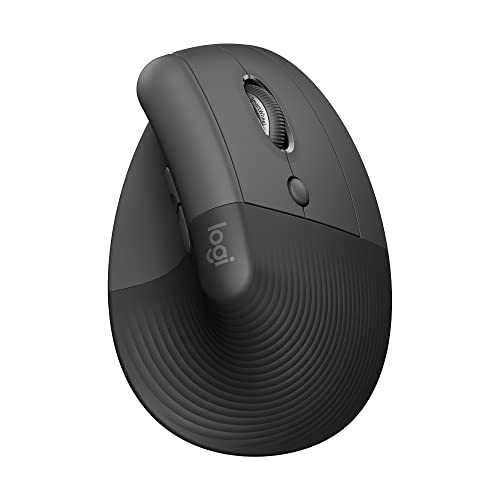
The Logitech Lift is my top choice for most office users. Its upright shape helps keep the hand in a more natural handshake position. That design can reduce the need to turn the forearm inward while pointing and clicking. The mouse also has a thumb rest, which gives the hand a clear place to relax.
Lift feels smaller and less demanding than many large vertical mice. That makes it a strong match for small and medium hands, though users with very large hands may want a bigger body. Its wireless design keeps the desk tidy, and Logitech’s software adds useful control options on supported systems. It is not a gaming mouse, but it handles documents, email, browsing, and long work sessions very well.
Pros:
- Comfortable upright shape for daily office work
- Good fit for small and medium hands
- Helpful thumb rest and easy button reach
- Quiet clicking suits shared work areas
- Reliable wireless performance for normal desk use
- Useful button customization through Logitech software
Cons:
- Right-handed design limits hand choice
- Large hands may find the body too compact
- Vertical shape takes time to learn
What Amazon Buyers Are Saying
Customer reviews commonly praise the Lift for its comfortable shape, quiet clicks, and easy transition from a flat mouse. Many buyers say it helps them work with less wrist strain during long computer sessions. Some users also like its compact size and smooth movement.
The main complaints center on fit and adjustment. A few buyers find the mouse too small, while others need several days to get used to the upright angle. As with any wireless mouse, some review patterns mention battery or connection issues, but experiences vary by computer and setup.
My Recommendation
I recommend the Logitech Lift as the best ergonomic wireless mouse for most right-handed office users. It balances comfort, size, control, and brand support better than most rivals. Buy it if you want a clear ergonomic change without moving to a large or complex mouse.
ProtoArc EM11 NL Vertical Mouse

The ProtoArc EM11 NL gives shoppers a vertical design with a rechargeable battery. That combination makes it appealing to people who dislike replacing disposable batteries. The tall body supports a handshake-like grip and includes a thumb area for added stability. It also offers a practical set of controls for work, school, and home use.
This mouse suits buyers who want ergonomic features at a reasonable level of cost. Its shape may feel unusual at first, especially if you have always used a flat mouse. The rechargeable setup also means you must remember to charge it before the battery runs low. For routine office tasks, it offers a useful mix of comfort and convenience.
Pros:
- Vertical grip can reduce inward forearm rotation
- Rechargeable design cuts down on battery replacement
- Comfortable option for long browsing and office tasks
- Thumb support helps reduce accidental slips
- Wireless desk setup keeps cables away
- Good choice for buyers seeking strong basic value
Cons:
- Learning curve for users new to vertical mice
- Rechargeable models need regular charging
- May not fit very small or very large hands equally well
What Amazon Buyers Are Saying
Amazon buyers often highlight the comfortable vertical grip and the convenience of the rechargeable battery. Reviews tend to favor it for general office work, browsing, and home computer use. Some customers also appreciate getting ergonomic features without paying premium-brand pricing.
Less positive comments often involve the learning period and individual hand fit. Some buyers expect instant relief but find that posture, desk height, and grip pressure still matter. A few reviews mention charging or connection concerns, so I suggest checking the return policy and keeping the mouse charged.
My Recommendation
The ProtoArc EM11 NL is worth considering if you want a rechargeable vertical mouse with a practical feature set. It is a good value pick, but I would choose the Logitech Lift first when brand software and refined fit matter most.
Anker Vertical Ergonomic Mouse

The Anker 2.4G Wireless Ergonomic Mouse remains a popular low-cost way to try a vertical design. Its right-handed body places the hand on its side rather than flat on the desk. A thumb rest and textured surface help keep the grip stable. The included USB receiver makes setup simple on computers with a compatible port.
This model makes the most sense for shoppers who want basic wrist support without spending much. It focuses on core mouse tasks instead of advanced software or premium materials. The shape feels larger than a standard compact mouse, which can help some users but may feel bulky to others. I see it as a sensible entry point, not a high-end productivity tool.
Pros:
- Affordable way to try a vertical mouse
- Simple USB receiver setup
- Hand position feels more natural than a flat mouse for many users
- Textured surface supports a steady grip
- Useful for browsing, documents, and basic office work
- Dedicated sensitivity control adds flexibility
Cons:
- Right-handed only
- Less refined than premium ergonomic mice
- USB receiver can be inconvenient for some newer laptops
- Large body may not suit small hands
What Amazon Buyers Are Saying
Many Amazon customers like the Anker because it offers a noticeable change from a flat mouse at a modest price. Buyers often mention the vertical grip, simple setup, and comfortable feel during normal work. It is frequently chosen by people who want to test ergonomic mouse design before making a larger investment.
Common concerns include the larger shape, stiff-feeling buttons for some users, and the adjustment period. Some buyers also report that the mouse does not suit their hand size. Review results can differ, so I would measure your hand and confirm that your computer has a usable USB port.
My Recommendation
I recommend the Anker as a budget-friendly first vertical mouse. It is worth buying when price matters most and you need basic wireless function. Choose a newer Bluetooth model if your laptop has few or no USB-A ports.
TECKNET Ergonomic Vertical Mouse

The TECKNET ergonomic vertical mouse stands out for users who move between several devices. Its listed design supports Bluetooth use and switching among up to three devices. The vertical shape aims to keep the hand in a less twisted position, while the sensitivity options give you more control over pointer speed. This is a useful feature set for a home office or shared workspace.
The mouse offers a good balance between comfort and flexibility. Multi-device support can reduce the need to carry separate mice for a laptop, desktop, and tablet setup. Still, a vertical mouse takes time to master, and comfort depends on your hand size and grip. I would consider this model when connection options matter as much as wrist position.
Pros:
- Supports use across multiple devices
- Bluetooth connection reduces cable clutter
- Vertical body encourages a relaxed handshake grip
- Adjustable sensitivity helps with different screens
- Useful fit for home and hybrid offices
- Good feature range for its class
Cons:
- Some device features may depend on operating system support
- Vertical design needs an adjustment period
- Hand fit may not suit every user
What Amazon Buyers Are Saying
Buyer comments commonly focus on the value of multi-device use and the comfortable upright shape. Users who work with more than one computer often like the ability to move between devices without changing mice. Reviews also mention the useful sensitivity control and the clean wireless setup.
Some shoppers report that switching or pairing takes time to understand. Other comments focus on the size or feel of the shell. Because Bluetooth behavior can vary by computer, I suggest checking your device compatibility before purchase.
My Recommendation
The TECKNET is a strong choice for people who need one ergonomic mouse for several devices. It offers more connection flexibility than a basic USB model. Buy it if multi-device work matters; choose the Lift if single-device comfort is your main goal.
Logitech ERGO M575S Trackball

The Logitech ERGO M575S takes a different path to comfort. Instead of moving across the desk, the mouse stays still while your thumb moves the trackball. This design works well on a small desk or a crowded workstation. It also limits broad arm movement, which some users find helpful during long computer sessions.
The M575S has a familiar palm shape, so it may feel easier to learn than a steep vertical mouse. However, trackball control is a learned skill, especially for precise selections. Dust and dirt can also affect the ball area over time, so regular cleaning helps. I recommend it for office work, browsing, and fixed desk setups rather than fast-action gaming.
Pros:
- Needs very little desk space
- Reduces the need to move the whole arm
- Thumb control can feel natural after practice
- Comfortable palm support for many users
- Useful for crowded or uneven work surfaces
- Wireless design keeps the stationary setup tidy
Cons:
- Trackball control has a learning curve
- Needs occasional cleaning around the ball
- Right-handed design limits flexibility
- May not suit users who prefer normal mouse movement
What Amazon Buyers Are Saying
Amazon buyers often praise the M575S for its small desk footprint and reduced arm movement. Many users say they enjoy the thumb ball after a short adjustment period. It is also popular with people who work on narrow desks or use a mouse beside a keyboard, notebook, or drawing device.
The most common concerns relate to the trackball itself. Some buyers need time to gain speed and accuracy, while others prefer a traditional sensor. Reviews also remind buyers that cleaning and hand position affect smooth tracking.
My Recommendation
The ERGO M575S is a smart buy if you want an ergonomic wireless mouse that stays in one place. It is not the best match for everyone, but it solves desk-space problems better than a standard mouse. Give it a few days before judging the trackball control.
Logitech MX Vertical Mouse

The Logitech MX Vertical is the premium option in this group. Its tall design strongly changes the angle of the hand and forearm. The broad body gives the palm more support than compact vertical models. It also includes extra controls that can speed up common work tasks.
This mouse feels substantial and stable, which suits people who want a serious productivity tool. It may take longer to learn than the Lift because the angle and size are more pronounced. Its price also sits above many basic ergonomic models. For people who spend many hours at a computer and want a refined vertical design, that higher cost may make sense.
Pros:
- Strong vertical posture for ergonomic use
- Large palm area supports a relaxed grip
- Premium feel and stable desk control
- Useful shortcut button for work tasks
- Supports wireless and Bluetooth-style workflows
- Good fit for many medium and large hands
Cons:
- Higher price than entry-level vertical mice
- Large body may overwhelm small hands
- Needs more time to learn than a standard mouse
- Not designed for left-handed users
What Amazon Buyers Are Saying
Buyers commonly praise the MX Vertical for its solid build, smooth movement, and supportive shape. Many long-term computer users say the mouse feels comfortable after they adapt to its angle. Reviews also like its extra controls and polished software support.
The main complaints involve size, price, and the learning curve. Some users find the body too large or too tall for their grip. Others do not feel the premium price adds enough value for light computer use. These comments show why hand size and daily hours matter before buying.
My Recommendation
The MX Vertical is worth buying for heavy office users who want a premium, full-size vertical mouse. It is one of the strongest options for sustained productivity. I would not pay extra for it if you only browse for a short time each day.
Logitech M510 Wireless Mouse
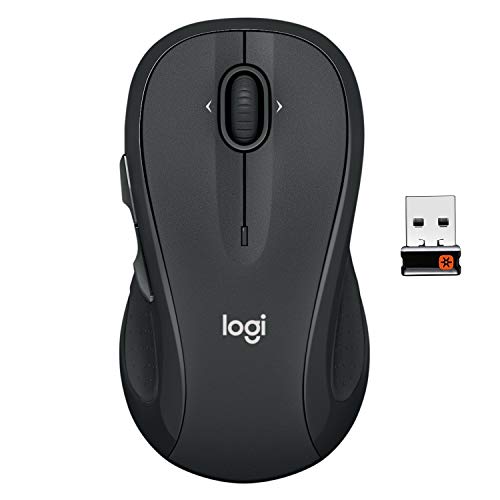
The Logitech M510 is not a vertical mouse, but its full-size shape can still suit users who want a supported palm and familiar control. Its traditional design feels easy from the first click. The contoured body gives more room than many slim travel mice, and the wireless receiver keeps the desk free from a mouse cable.
I would choose the M510 for simple comfort rather than strong wrist-angle correction. It may work well for users who dislike vertical mice or need a low learning curve. The full-size shell can feel comfortable for larger hands, but it may take more desk space. If you have wrist pain linked to a flat grip, a vertical model may offer a more direct change.
Pros:
- Familiar shape with almost no learning curve
- Full-size body gives the palm more room
- Reliable choice for basic daily tasks
- Useful side controls for browsing
- Comfortable option for users who dislike vertical designs
- Simple wireless USB setup
Cons:
- Does not provide a vertical handshake grip
- May feel large on a small desk
- USB receiver needs a compatible port
- Less specialized for wrist-angle concerns
What Amazon Buyers Are Saying
Amazon buyers often like the M510 for its familiar shape, roomy body, and straightforward setup. Many reviews describe it as a dependable mouse for home, office, and general computer use. Users who want to avoid the adjustment period of an ergonomic vertical mouse often choose this style.
Some buyers report that it feels heavier or larger than compact mice. Others want a newer connection system or a more modern shape. The key point is simple: this is a comfortable traditional mouse, not a strong alternative to a vertical design.
My Recommendation
The M510 is worth buying if you want a basic, full-size wireless mouse with familiar handling. It is not my first choice for a wrist-angle problem. Pick it for easy use, and choose the Lift or MX Vertical for a more focused ergonomic design.
TECKNET Wireless Ergonomic Mouse

The TECKNET 2.4G wireless mouse offers a traditional ergonomic shape with adjustable sensitivity. Its curved shell gives the hand a more shaped place to rest than a very flat travel mouse. The 2.4 GHz receiver supports a simple plug-in setup for compatible computers. Its purple finish also gives it a more personal look than many plain office mice.
This model targets shoppers who want low-cost comfort without a vertical body. It is easy to use for documents, web pages, and school work. The shape may reduce grip pressure for some users, but it does not change the forearm angle as much as a vertical mouse. I see it as a practical everyday option for people who want familiar control and a modest ergonomic upgrade.
Pros:
- Comfortable curved body for daily tasks
- Simple 2.4 GHz wireless connection
- Adjustable sensitivity supports different work styles
- Easy choice for school and home offices
- Familiar shape needs little training
- Distinctive purple color adds visual appeal
Cons:
- Traditional shape offers less wrist-angle change
- USB receiver may not fit newer port-only laptops
- Not ideal for users seeking a true vertical design
What Amazon Buyers Are Saying
Customer reviews often praise the low price, comfortable curve, and easy wireless setup. Buyers use it for ordinary office tasks, school work, and home browsing. Some also like the color and the ability to change pointer sensitivity.
Common limits include the traditional shape and the need for a USB receiver. Some users want more advanced controls or a larger body. If your main goal is a vertical wrist position, this model will not replace a dedicated vertical mouse.
My Recommendation
The TECKNET is a good budget choice for familiar, everyday comfort. It is worth buying if you want a simple wireless mouse and do not need a vertical grip. For a true ergonomic change, I would spend more on the Logitech Lift or choose the Anker on a tight budget.
How to Choose the Best Ergonomic Wireless Mouse
Choosing the best ergonomic wireless mouse takes more than checking the word “ergonomic” on a product page. Hand size, grip style, desk space, connection type, and daily work all affect comfort. I suggest focusing on the points below before you buy.
1. Match the Shape to Your Hand and Grip
Start with hand size. A small mouse can make large hands curl too tightly. A large mouse can force small hands to stretch. Measure from the base of your palm to the tip of your middle finger, then compare that result with the maker’s size guidance when available.
Next, think about your grip. A palm grip needs more body and palm support. A claw grip needs a shorter shell and clear button control. A vertical mouse can help users who want less inward forearm rotation, but it does not suit every hand. A trackball can work well when you want to keep the mouse still.
2. Choose the Right Wireless Connection
A 2.4 GHz mouse uses a small USB receiver. It often offers simple plug-and-play use, but your computer needs a compatible port. Some laptops now favor USB-C or Bluetooth, so check the ports before ordering. A Bluetooth mouse saves a port and works well for laptops, but pairing can vary by operating system.
Multi-device support matters if you use a work laptop and a home computer. A rechargeable mouse can reduce battery waste, but you must charge it. A replaceable-battery mouse may suit travel or emergency use. Look for a clear battery plan that matches your routine.
3. Weigh Control, Features, and Long-Term Value
Pointer speed matters for large screens and detailed work. Adjustable sensitivity gives you more choice, but a high number alone does not prove better accuracy. Check the button layout, scroll wheel feel, thumb controls, and software support. Extra buttons help only when you can reach them without changing your grip.
Also consider desk space. A trackball needs little movement room. A full-size vertical mouse needs more space but may offer more palm support. Finally, review the return policy. Comfort is personal, and even the best ergonomic wireless mouse may not fit your hand.
Final Verdict: Which Should You Buy?
For most people, I recommend the Logitech Lift. It offers the best balance of comfort, size, control, and easy daily use. Choose the MX Vertical for premium support, the ERGO M575S for a small desk, or the Anker for lower cost.
The best ergonomic wireless mouse should match your hand, work habits, and computer ports. Pick the shape you can hold with a light grip, then adjust your chair, desk, and screen height for better results.
FAQs Of best ergonomic wireless mouse
What is the best ergonomic wireless mouse for office work?
The Logitech Lift is my top office pick. Its vertical shape, thumb support, quiet clicks, and compact size suit many daily work setups.
Are vertical wireless mice better for wrist comfort?
A vertical mouse may place your hand in a more natural handshake position. Comfort still depends on hand size, posture, grip pressure, and correct desk height.
Is a trackball mouse good for a small desk?
Yes. A trackball stays in one place, so it needs very little desk space. The Logitech ERGO M575S is a strong choice, but it takes practice.
Should I buy a Bluetooth or USB wireless mouse?
Choose Bluetooth when you want to save a USB port. Choose a USB receiver when you want simple plug-in setup and your computer has a compatible port.
What should I check before buying an ergonomic mouse?
Check the hand fit, grip style, mouse angle, button reach, connection type, battery design, and return policy. These details affect comfort more than marketing claims.