The R-Go Twister is my best ambidextrous ergonomic mouse pick for its reversible design, compact fold, and flexible connections.
If you switch hands, share a computer, or simply dislike a mouse shaped for one side, choosing the right model can take some care. Many products called ergonomic have a fixed right-hand shape, so they do not suit left-handed use. I compared the options below by hand fit, shape, connection type, and daily ease of use. You’ll find true ambidextrous designs alongside right-handed ergonomic models, clearly labeled so you can choose with confidence.
See the differences between my top picks at a glance.
| Mouse | Hand fit | Connection | Best for | Quick note | Check price |
|---|---|---|---|---|---|
| R-Go Twister | Ambidextrous | Bluetooth / USB-C | Switching hands | Foldable vertical design | View on Amazon |
| Nulea 55mm Trackball | Ambidextrous design | Wireless | Small desk spaces | Move the ball, not the mouse | View on Amazon |
| Logitech M510 | Contoured; check hand fit | 2.4 GHz wireless | Everyday desktop use | Familiar, full-size shape | View on Amazon |
| Lenovo WL150 | Ambidextrous | 2.4 GHz USB-A | Travel and basic work | Compact, simple design | View on Amazon |
| Anker Vertical | Right-handed | 2.4 GHz USB receiver | Trying a vertical grip | Simple, budget-friendly layout | View on Amazon |
| ProtoArc EM11 NL | Right-handed | Bluetooth / 2.4 GHz | Multi-device use | Rechargeable vertical mouse | View on Amazon |
| Logitech Lift | Right-handed model | Wireless | Small to medium hands | Vertical shape with thumb rest | View on Amazon |
| TECKNET Vertical 3-Device | Right-handed | Bluetooth / wireless | Several devices | Adjustable DPI settings | View on Amazon |
| Logitech MX Vertical | Right-handed | Wireless | Premium desktop comfort | Tall, sculpted vertical form | View on Amazon |
| TECKNET 2.4G Ergonomic | Check shape before buying | 2.4 GHz USB receiver | Basic wireless work | Up to 2600 DPI listed | View on Amazon |
R-Go Twister Ambidextrous Mouse

The R-Go Twister stands out because it is built for both left- and right-handed use. Its vertical form gives your hand a different grip than a flat, traditional mouse. The body folds, which makes it easier to pack than many full-size ergonomic models. It also offers Bluetooth and USB-C connection options, according to the product listing.
This design is a strong fit if you want to change hands during the day or share a mouse with someone who uses the other hand. Its break software is intended to remind users to take short breaks, though it cannot replace good desk habits. The quiet-click feature may also suit shared offices or late-night work. Keep in mind that a vertical mouse can take time to feel natural.
Pros:
- Designed for left- and right-handed use
- Foldable body is easier to carry
- Vertical grip offers an alternative to a flat mouse
- Bluetooth and USB-C connection options
- Quiet-click design can be useful in shared spaces
- Break reminder software is included in the product description
Cons:
- Costs more than simple compact mice
- The vertical grip may need an adjustment period
- Folding parts add complexity compared with a fixed shell
What Amazon Buyers Are Saying
I can’t verify current review counts or individual buyer comments here, so I won’t claim a live review consensus. Before buying, check recent comments for details on how smoothly the fold works, how the mouse feels in each hand, and whether the connection options fit your computer. For this unusual design, those hands-on details matter more than a broad star average.
My Recommendation
This is my top pick if you want a true ambidextrous ergonomic mouse with a vertical grip and a travel-friendly build. It makes the most sense for people who value switching hands or packing light. Expect a learning period, and check the size and connection details before ordering. My rating reflects its useful design, with a small deduction for its specialist shape.
Nulea Wireless 55mm Trackball Mouse

The Nulea trackball takes a different approach to mouse movement. Instead of sliding the whole device, you roll its large 55mm ball with your fingers. That can help when your desk has little room for wide arm movements. The product listing describes it as an ambidextrous wireless model.
A trackball has a distinct feel, so it is not the right choice for every user. It can suit people who want to keep the mouse in one place or who use a compact work surface. The ball needs occasional cleaning to keep movement smooth. Check the button layout and connection details on the current listing to make sure they match your setup.
Pros:
- Ambidextrous design supports use with either hand
- Does not need to slide across the desk
- Large 55mm ball gives fingers a broad control surface
- Useful for a small or crowded workstation
- Wireless design reduces cable clutter
Cons:
- Trackball control feels unfamiliar to many new users
- The ball and its contact area need occasional cleaning
- Not ideal for users who prefer full-arm mouse movement
What Amazon Buyers Are Saying
I can’t confirm the current review history for this listing. When reading buyer feedback, look for comments about ball smoothness, cursor control, and how easy the buttons are to reach with either hand. Also check for notes about cleaning and setup, since those are practical parts of daily trackball use that product photos cannot show.
My Recommendation
Consider the Nulea if you want an ambidextrous pointer that stays in one spot. It can be a useful alternative to a standard mouse, especially on a small desk, but it has a learning curve. I would not buy it just because the ball looks interesting; choose it if you are ready to learn trackball control. Overall, I rate it 4/5.
Logitech M510 Wireless Mouse
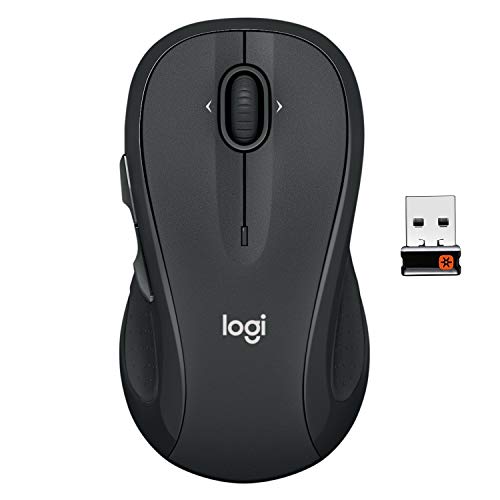
The Logitech M510 is a familiar full-size wireless mouse for everyday computer work. Its low, contoured body offers a more shaped feel than a small travel mouse. It connects through a 2.4 GHz USB receiver, so your computer needs a compatible USB-A port. Its side controls and thumb area may favor right-handed use, even though some listings describe it as ambidextrous.
That distinction matters if you need a mouse that works equally well in either hand. The M510 can still be a practical choice for right-handed users who want a conventional shape and wireless freedom. It is less suited to buyers who need a clearly symmetrical body or plan to switch hands often. Check the current listing for included parts and device compatibility.
Pros:
- Full-size shape feels familiar to many desktop users
- Wireless 2.4 GHz connection avoids a cord across the desk
- Contoured body offers more shaping than a basic flat mouse
- Useful for common office and home tasks
- Side controls can make page navigation quicker for users who can reach them
Cons:
- Side controls may not suit left-handed use
- USB receiver needs an available compatible port
- Its shape is not as strongly ergonomic as a vertical model
What Amazon Buyers Are Saying
I can’t verify current Amazon comments or ratings for this product. When you review recent buyer notes, focus on comfort over a full workday, side-button reach, and receiver setup. Those details can help you decide whether the M510’s shaped body fits your hand and whether its controls work for your preferred grip.
My Recommendation
The M510 is a sensible everyday option if you want a full-size wireless mouse and use your right hand. I would not call it a dependable ambidextrous pick for someone who needs equal comfort in both hands. It suits shoppers who value a familiar shape more than a vertical or trackball design. My overall rating is 4/5 for general use, but lower for true ambidextrous needs.
Lenovo WL150 Ambidextrous Mouse

The Lenovo WL150 keeps things simple with a compact, ambidextrous shape. Its 2.4 GHz connection uses a nano USB-A receiver, which makes it easy to pair with many laptops and desktop computers that have the right port. The listing specifies 1,000 DPI, a basic level that can suit everyday tasks. Lenovo also lists a 3-million-click rating for the buttons.
This is a practical choice for travel, school, or general office work. Its compact body takes less space in a bag than a large ergonomic mouse, though people with large hands may prefer a fuller grip. The WL150 does not offer a vertical wrist angle or the extra hand support of a larger model. Pick it for a simple, two-hand shape rather than advanced comfort features.
Pros:
- Ambidextrous shape supports left- and right-hand use
- Compact body is easy to carry
- Wireless receiver avoids a cable
- 1,000 DPI suits basic pointer tasks
- Listed 3-million-click rating gives a durability reference
Cons:
- Small size may feel cramped in larger hands
- USB-A receiver may need an adapter for some newer devices
- Does not offer a vertical grip or trackball design
What Amazon Buyers Are Saying
I can’t confirm current buyer review trends for the WL150. Check recent comments for the mouse’s size, receiver fit, and performance on your desk surface. For a compact basic mouse, user notes about hand comfort and whether the nano receiver stays secure can be more useful than claims about advanced ergonomic support.
My Recommendation
The WL150 is a good low-fuss choice when you need an ambidextrous mouse for light daily use or travel. It is not a deep ergonomic device, but its simple shape works for people who want a mouse that does not lock them into one hand. Make sure its compact size suits your grip. I rate it 4/5 for portability and basic use.
Anker 2.4G Vertical Ergonomic Mouse

The Anker vertical mouse is a right-handed model with a raised body and an angled grip. That shape sets it apart from flat, traditional mice and may feel more natural to some users. It connects with a 2.4 GHz USB receiver. The model is known for selectable DPI settings, which let users change pointer speed to suit different tasks.
It is important to be clear about hand fit: this is not an ambidextrous mouse. The sculpted vertical body suits the right hand, so left-handed users should look elsewhere. For right-handed buyers who want to try a vertical design without paying for a premium model, it can be a useful starting point. Give your hand time to adapt before judging its comfort.
Pros:
- Angled vertical shape differs from a flat mouse grip
- Designed for right-handed use with a shaped hand rest
- Wireless USB receiver keeps the desk free of a mouse cable
- Selectable pointer speed supports different work styles
- Simple layout can suit general computer tasks
Cons:
- Not suitable for left-handed users
- Vertical grip may feel unusual at first
- Uses a USB receiver rather than a Bluetooth connection
What Amazon Buyers Are Saying
I can’t verify current Amazon reviews for this listing, so check recent comments before you buy. Look for buyer notes about hand size, the transition to a vertical grip, and how well the receiver works with your computer. Those are the details most likely to affect whether this right-handed model suits your desk routine.
My Recommendation
The Anker is worth considering if you use your right hand and want an affordable way to test a vertical mouse. It does not belong on a shortlist of true ambidextrous mice, but it may suit buyers searching for an ergonomic right-handed alternative. Check the connection and size details first. I rate it 4/5 as an entry-level vertical option.
ProtoArc EM11 NL Vertical Mouse

The ProtoArc EM11 NL is a rechargeable vertical mouse aimed at users who want to connect with more than one device. Its listing describes Bluetooth and 2.4 GHz wireless options, which can help if you move between a laptop and another computer. Its vertical shape is built for the right hand, not for equal left- and right-hand use. The black finish gives it a plain look that fits most desk setups.
Multi-device switching can reduce the need to keep separate mice on a busy desk. Still, the main buying question is whether the size and angle suit your hand. A vertical mouse changes how you guide the cursor, so allow time to adjust. If you are left-handed or need a truly shared mouse, choose a reversible design instead.
Pros:
- Rechargeable design avoids routine battery replacement
- Bluetooth and 2.4 GHz options offer connection flexibility
- Multi-device support suits a laptop-and-desktop setup
- Vertical form gives a different grip from a standard mouse
- Useful for right-handed users seeking a wireless ergonomic option
Cons:
- Right-handed shape is not ambidextrous
- Vertical control takes practice for some users
- Buyers should confirm device switching and compatibility needs before purchase
What Amazon Buyers Are Saying
I can’t verify the latest buyer feedback for this exact listing. Read recent reviews for details on charging, Bluetooth pairing, switching between connected devices, and hand fit. These points can vary with a person’s setup and hand size, so look for comments that match how you plan to use the mouse.
My Recommendation
The EM11 NL is a useful option for right-handed users who want rechargeable power and more than one connection method. It is not the best ambidextrous ergonomic mouse because its body favors one hand. I would shortlist it for a multi-device desk, then compare its size and controls with your current mouse. My rating is 4/5.
Logitech Lift Vertical Ergonomic Mouse
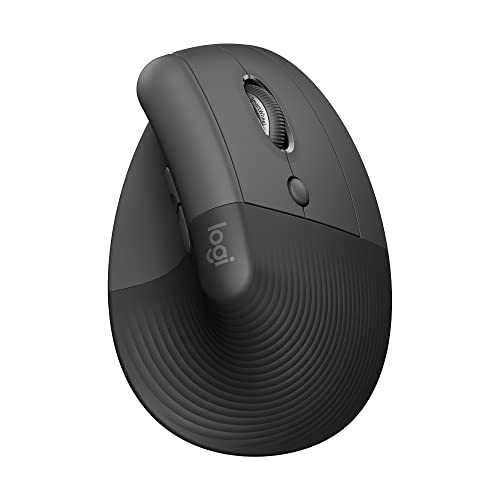
The Logitech Lift is a compact vertical mouse made for right-handed use in this graphite version. Its raised body and thumb rest create a more upright hand position than a typical flat mouse. Logitech also sells other versions, so check the exact model before ordering if you need a left-handed mouse. This review covers the linked right-handed product.
The Lift can be a good fit for smaller or medium-sized hands that want a sculpted vertical shape. A comfortable grip depends on your hand size and how you rest your fingers, so the model’s dimensions matter. It works best for people willing to learn a new way to steer a pointer. It is a premium choice, not a reversible mouse for shared use between hands.
Pros:
- Vertical shape offers a distinct alternative to a flat mouse
- Thumb rest gives the hand a defined place to rest
- Compact build can suit smaller and medium hands
- Logitech offers separate versions for different hand preferences
- Wireless design keeps the workspace less cluttered
Cons:
- This graphite model is right-handed
- Not a good fit for users who need a single mouse for both hands
- Costs more than simple wireless models
What Amazon Buyers Are Saying
I can’t confirm current review patterns for the graphite Lift listing. Check recent buyer comments for hand-size fit, the feel of the buttons, and the time needed to get used to the vertical angle. If you need left-handed use, make sure you are reading feedback for the left-hand version rather than this right-handed model.
My Recommendation
The Lift is a strong ergonomic option for right-handed users with smaller or medium hands who want a vertical mouse from a major brand. It is not ambidextrous, so it does not suit every shopper in this guide. If the shape matches your hand, its focused design may justify the higher price. I rate it 4.5/5 for its intended user.
TECKNET 3-Device Vertical Mouse

This TECKNET model pairs a vertical shape with support for up to three devices, as stated in its listing. Its connection options include Bluetooth and wireless use, which can help people who work across more than one computer. The listing also advertises up to 4,800 DPI, so users can change cursor speed. The mouse has a right-handed vertical form.
That combination can be handy for a desk with a work computer and a personal laptop. Before buying, check which connection mode works with each device and how you switch between them. The DPI number alone does not tell you whether a mouse feels precise; your screen size and pointer settings matter too. This model is not a good choice for left-handed use.
Pros:
- Supports connection to up to three devices, per listing
- Bluetooth and wireless options add setup flexibility
- Advertised DPI range gives users pointer-speed choices
- Vertical body offers an alternative to a standard grip
- Can help reduce the need to keep several mice on a desk
Cons:
- Right-handed design is not ambidextrous
- Device switching adds a feature to learn and manage
- Vertical shape may not suit every hand or work style
What Amazon Buyers Are Saying
I can’t verify current buyer comments for this product. Look for recent reports on device switching, Bluetooth pairing, and whether the mouse fits your hand. It is also useful to see if buyers with a similar computer setup found the connection choices easy to use.
My Recommendation
The TECKNET is worth a look if you are right-handed and want one vertical mouse for several devices. Its advertised DPI and connection options look useful, but fit matters more than a long feature list. It is not an ambidextrous pick, and a left-handed buyer should skip it. My rating is 4/5 for multi-device value.
Logitech MX Vertical Mouse

The Logitech MX Vertical is a larger, sculpted mouse for right-handed users. Its tall body creates a strong vertical angle and gives the hand a broad place to rest. The model supports wireless use and is aimed at people who spend a lot of time at a computer. Its distinctive form is quite different from the symmetrical shell of a basic ambidextrous mouse.
This mouse is best for a desk setup where comfort and a premium build matter more than a small footprint. Its size may feel too large for some hands, so compare measurements and consider how you grip a mouse. Like other vertical models, it takes time to get used to. It is not suitable for left-handed users who need an equally shaped mouse.
Pros:
- Sculpted vertical body supports a defined right-hand grip
- Large shape may suit users who prefer a fuller mouse
- Wireless design supports a cleaner desk
- Premium option for a dedicated workstation
- Distinct form may appeal to users seeking a major change from a flat mouse
Cons:
- Right-handed shape is not ambidextrous
- Large body may not suit small hands
- Premium positioning may be more than casual users need
What Amazon Buyers Are Saying
I can’t confirm current Amazon review trends for the MX Vertical. Read recent feedback about hand size, the learning period, and the feel of the body during long sessions. Also check whether buyers found the size suitable for their desk, since this is a more substantial mouse than compact travel models.
My Recommendation
The MX Vertical is a serious option for right-handed users who want a large, sculpted vertical mouse. It is not the best ambidextrous ergonomic mouse because it does not serve both hands. If its size and angle fit you, it may be a good premium desk choice. I rate it 4.5/5 for its target user, while left-handed buyers should choose another model.
TECKNET 2.4G Ergonomic Wireless Mouse

This TECKNET mouse uses a 2.4 GHz wireless connection with a USB receiver. Its listing advertises up to 2,600 DPI, which gives users a few pointer-speed choices for common computer work. The black design is simple and suited to a home or office desk. The product title calls it ergonomic, but check the photos and shape before assuming it will fit both hands.
Unlike a clear vertical or trackball design, the word ergonomic can mean different things from one model to another. Look for a centered, balanced body if you need to use the mouse with either hand. Also confirm whether the receiver works with your computer, especially if it has only USB-C ports. This is a basic wireless choice rather than a specialized ergonomic device.
Pros:
- Wireless connection reduces cable clutter
- Advertised DPI options let users adjust pointer speed
- Simple design suits everyday tasks
- USB receiver setup is familiar to many computer users
- Can be a lower-cost alternative to complex ergonomic models
Cons:
- Ambidextrous fit is not clear from the product title alone
- USB-A receiver may require an adapter on some devices
- Does not provide a clear vertical or trackball hand position
What Amazon Buyers Are Saying
I can’t verify the latest customer reviews for this model. Check current buyer notes for the exact shell shape, click feel, and how well the receiver works with your computer. If you need a true ambidextrous mouse, look for comments or product photos that clearly show a balanced shape rather than relying on the word “ergonomic.”
My Recommendation
This TECKNET model may work as an everyday wireless mouse if you want simple controls and adjustable pointer speed. I would not choose it as a top ambidextrous ergonomic mouse without first confirming that its shell suits both hands. It offers less specialized support than the R-Go or trackball options. My rating is 3.5/5 until hand fit is confirmed.
How to Choose the Best Ambidextrous Ergonomic Mouse
The best ambidextrous ergonomic mouse should fit your hand and your work habits. A product can use the word “ergonomic” and still have a shape that favors one hand. Check the mouse itself, the button layout, and the way it moves before you focus on brand names or extra features.
1. Confirm the Shape Works in Both Hands
Start by checking whether the body is truly symmetrical or designed to switch between left- and right-hand use. A vertical mouse often has a fixed thumb rest and buttons on one side. That may feel good in the intended hand but awkward in the other. The R-Go Twister and Lenovo WL150 are clearer choices for two-hand use in this group, while the Logitech vertical models and Anker are right-handed picks.
Also think about hand size. A compact mouse can travel well, but it may feel cramped if your hands are large. A full-size mouse can offer more room, yet take up more space. If you can, compare the product’s size with a mouse you already find comfortable.
2. Pick a Movement Style That Suits Your Desk
A standard mouse needs clear space to move. That is fine for many desks, but a small work surface may call for another design. A trackball stays in place while your fingers move the ball, which can save desk space. A vertical mouse changes your grip angle but still moves across the desk. Try to match the design to how you already work instead of buying a shape just because it looks different.
Remember that a new style can take time to learn. A trackball may need a few days of practice, and a vertical mouse may feel odd at first. Move at a comfortable pace and take breaks. No mouse can promise to prevent pain or treat an injury. If you have ongoing pain, ask a qualified health professional for advice.
3. Match the Connection and Controls to Your Setup
Check whether the mouse uses Bluetooth, a USB receiver, or both. A receiver can be easy to set up, but it needs a compatible port. Some newer laptops have only USB-C ports, so you may need an adapter for a USB-A receiver. If you work on several devices, look for a model that clearly supports multi-device use and check how the switch works.
Think about battery style, too. A rechargeable mouse saves disposable batteries but needs charging. A model that uses replaceable batteries may suit people who want to swap power quickly. Finally, consider how much pointer-speed control you need. A high DPI figure is not a measure of comfort or accuracy by itself; choose a setting that feels right on your screen.
Final Verdict: Which Should You Buy?
The R-Go Twister is my top choice if you want a true ambidextrous ergonomic mouse with a vertical grip and a foldable design. Choose the Lenovo WL150 for a simple, compact, two-hand mouse, or the Nulea if you want a trackball that stays in one place.
Right-handed shoppers can also consider the Logitech Lift, MX Vertical, Anker, ProtoArc, or TECKNET vertical models. Check fit and connection details before ordering, and choose the shape that supports your daily routine.
FAQs Of best ambidextrous ergonomic mouse
What is the best ambidextrous ergonomic mouse?
The R-Go Twister is my top pick for its ambidextrous design, vertical form, and foldable body. The best fit still depends on your hand size and work style.
Are vertical mice ambidextrous?
Not always. Many vertical mice have a fixed thumb rest and suit one hand. Check the exact model before buying.
Is a trackball mouse good for a small desk?
It can be. A trackball stays in one place, so it needs less room for movement than a standard mouse.
Can I use an ergonomic mouse with either hand?
Only if its shape and buttons support both hands. Look for a symmetrical or reversible design, not just the word “ergonomic.”
Does a vertical mouse prevent wrist pain?
No mouse can promise to prevent or treat pain. Fit, posture, breaks, and desk setup all matter. Ask a health professional about ongoing discomfort.