The best smartwatch for epilepsy combines clear medical ID, reliable alerts, comfort, and easy access to emergency health details.
A seizure can happen at home, at work, or during a walk when no one knows your medical history. A smartwatch may help you contact a trusted person, share your location, or show a medical ID, but no consumer watch can diagnose epilepsy or replace medical care. In this guide, I review seven smartwatch medical ID charms and tags that make epilepsy information easier to see. I also explain which watch features matter most, what these products can and cannot do, and how to choose a safer daily setup.
Epilepsy Stainless Steel Watch Charm

This stainless steel epilepsy medical alert watch charm gives a smartwatch band a clear purpose. Its small ID format can show that the wearer has epilepsy or may need help during a seizure. Stainless steel also makes sense for daily use because it feels stronger than thin plastic and can resist normal contact with clothing, desks, and bags. I like this style for people who want a simple marker without changing the watch itself.
The charm is designed for common silicone smartwatch bands in several popular widths. Still, I would check the band opening and watch size before ordering. This is an identification aid, not a seizure detector, medical monitor, or emergency call system. Pair it with the watch’s emergency contacts and Medical ID features for a more complete safety plan.
Pros:
- Clear epilepsy identification at a glance
- Stainless steel construction feels durable
- Fits several common silicone band sizes
- Does not require charging or an app
- Works alongside an existing smartwatch
- Small design adds little weight to the wrist
Cons:
- It does not detect or record seizures
- It cannot call emergency services by itself
- Fit may vary with unusual band designs
Hand-Stamped Aluminum Epilepsy Charm

This hand-stamped aluminum charm takes a lighter approach to medical ID. Aluminum can feel comfortable for users who dislike a heavy metal tag on the wrist. The hand-stamped look also gives it a personal feel, rather than the polished look of a standard factory label. For a child, teen, or active adult, that softer style may make daily wear easier.
The listing describes the item as a charm only, so the smartwatch band is not included. That point matters when you compare the total cost. The charm can help a bystander notice an epilepsy warning, but it cannot provide medication instructions unless the lettering includes them. I recommend placing full emergency details inside the watch’s Medical ID profile as well.
Pros:
- Lightweight aluminum suits long wear
- Hand-stamped design feels personal
- Simple medical alert purpose
- No battery or software setup needed
- Can attach to a compatible smartwatch band
- Useful for people who prefer a subtle accessory
Cons:
- Band is not included
- Aluminum may show marks over time
- Small charm space limits the amount of text
Oneress QR Code Epilepsy Watch Label

The Oneress label adds a QR code to the medical ID idea. A responder can scan the code with a phone and view emergency information stored through the product’s system. This can help when the wearer needs to share more than a short phrase such as “epilepsy.” It may suit athletes, runners, and people who want a compact label on an Apple Watch or compatible smartwatch.
A QR code is only useful when it scans well and leads to current information. I would test the code after setup, review the linked details often, and avoid entering more private data than needed. The user should also know whether the page needs an internet connection or a specific account. A QR label can support the best smartwatch for epilepsy setup, but it does not replace a visible medical alert or a proper emergency plan.
Pros:
- QR format can hold more information than a tiny charm
- Useful for emergency contacts and key health notes
- Compact design fits an active lifestyle
- Works as a visible ID label for a smartwatch
- May help responders access details quickly
- Does not need a watch battery to display the label
Cons:
- Requires a working phone camera and readable code
- May depend on internet access or a linked service
- Private information needs careful review
Personalized Engraved Epilepsy Charm

Personalization can make a medical ID tag more useful in real life. This engraved charm is made for common smartwatch band widths, including 38mm, 40mm, 41mm, 42mm, and 44mm styles. You may be able to add details that matter to the wearer, such as a name, an emergency contact, or a short medication note. That extra context can help a bystander move from confusion to action.
I see this as a good choice for users who want a permanent-looking ID instead of a temporary sticker. Before ordering, plan the wording carefully because small tags have limited room. Use plain terms and avoid crowded text. A personalized charm cannot tell whether a seizure is happening, so the wearer should still use approved medical advice, prescribed treatment, and smartwatch emergency settings.
Pros:
- Personalized text can fit the wearer’s needs
- Compatible with several popular band widths
- Engraved details do not need charging
- Visible design may alert nearby helpers
- Useful for daily wear at school, work, or travel
- Can add a personal touch to a safety item
Cons:
- Small surface limits the amount of information
- Personalized items may be harder to return
- It does not offer automatic seizure alerts
Personalized Stainless Steel ID Tag
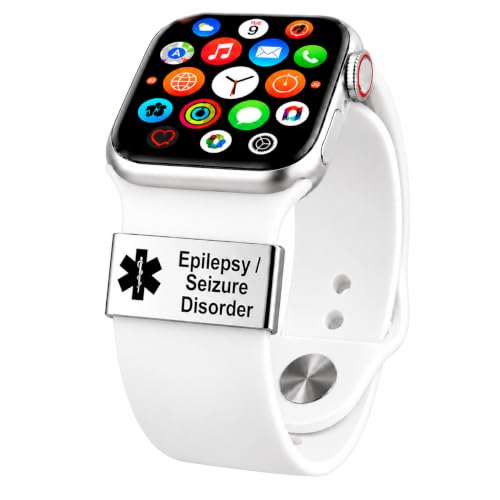
This personalized stainless steel tag is built around a clear emergency message. Its main strength is visibility: a helper can see that the wearer has a seizure disorder without opening a phone or navigating a watch menu. The stainless steel format also makes it a practical option for people who wear their watch every day. It can turn an ordinary band into a quiet safety signal.
I would choose this style for a person who wants both personalization and a sturdy material. Keep the message short, bold, and easy to read. A phrase such as “Epilepsy—Seizure Disorder” may be more useful in a stressful moment than a long paragraph. The tag is not a medical device, and it should support—not replace—care from a neurologist or other qualified clinician.
Pros:
- Stainless steel suits regular daily use
- Personalized engraving adds useful context
- Visible medical message needs no phone access
- Fits multiple smartwatch band sizes
- Light enough for normal wrist wear
- Supports a clear emergency identity plan
Cons:
- Limited space for long emergency notes
- Watch band compatibility still needs checking
- It cannot send an alert or share a location
Uloveido Rose Gold Epilepsy ID Plate

The Uloveido medical alert plate takes a more polished approach. Its rose gold finish may appeal to people who want a safety tag that blends with jewelry and everyday accessories. It is designed for Apple Watch and smartwatch bands, with a laser-engraved medical message. That combination can make the ID feel less like a hospital label and more like part of a normal outfit.
Style matters because the most useful medical ID is the one a person will keep wearing. I would still place function before color and confirm the plate will sit where a responder can see it. The wearer should keep emergency contacts and health details updated on the paired watch or phone. Among options for the best smartwatch for epilepsy, this product is best viewed as a stylish ID add-on, not a complete monitoring system.
Pros:
- Attractive rose gold finish
- Laser engraving supports clear long-term ID
- Designed for Apple Watch and smartwatch bands
- Does not require charging or pairing
- May encourage consistent medical ID use
- Useful for runners and active adults
Cons:
- Finish may not match every watch band
- Small plate limits detailed instructions
- It does not monitor seizure activity
Tobestu Black Epilepsy Medical ID Plate

The Tobestu black medical ID plate is a low-key choice for users who prefer a dark watch band. Its black finish can look natural with sport bands and work clothing. The personalized format may allow the wearer to include an epilepsy warning and a useful contact detail. I would consider it for someone who wants a medical alert marker without a bright metal appearance.
Black text and a dark background can affect contrast, so I would inspect the actual engraving before relying on it. The key message should remain easy to read in normal light. This product has no battery and no software, which makes it simple, but it also means it cannot detect a seizure or contact a caregiver. It works best as one layer in a larger safety plan.
Pros:
- Subtle black style suits sport bands
- Personalized ID can show epilepsy information
- No charging, updates, or app setup
- Lightweight for day-to-day use
- Useful for people who dislike flashy tags
- Can remain visible when the watch screen is off
Cons:
- Contrast should be checked before daily use
- Limited space for medical instructions
- It provides no automatic emergency response
What a Smartwatch Can Do for Epilepsy
Searching for the best smartwatch for epilepsy can lead to confusing claims. A smartwatch may offer helpful safety tools, but it is not the same as an epilepsy management system. Most consumer watches track general health signals, such as heart rate, movement, sleep, or location. They do not reliably identify every seizure, and they cannot replace a seizure action plan.
Many Apple Watch and Wear OS models include emergency calling, fall detection, location sharing, or a Medical ID feature. These tools may help in some situations, especially when a person can tap the screen or when the watch detects a hard fall. Yet a seizure does not always cause a fall, and a person may not be able to interact with the watch during or after an event.
Some research tools and specialty services study movement, heart rate, or electrodermal activity to detect certain convulsive seizures. Their performance can vary by person and seizure type. The Food and Drug Administration has warned that users should be careful with products that make medical claims without proper review. I would treat any seizure-alert feature as an extra layer, not as a guarantee of safety.
Features to Look for in the Best Smartwatch for Epilepsy
Medical ID That Works From the Lock Screen
A visible Medical ID can save time. On supported devices, a responder may access emergency contacts, allergies, blood type, or medical conditions without knowing the passcode. I suggest adding “epilepsy” in plain language and listing only information that is accurate and useful. Review the profile after every major medication or contact change.
Emergency Calling and SOS
Emergency SOS can let the wearer contact local emergency services or a chosen contact. Check how the feature works in your area. Some watches need a nearby phone, while cellular models may work on their own with an active plan. Test the steps with a trusted person so the user knows what to press under stress.
Fall Detection
Fall detection may help after a hard fall, but it has limits. A watch may miss a seizure without a strong impact, or it may ask for a response that the wearer cannot give. False alarms can also occur during sports or sudden movement. Turn it on only after reading the settings and explaining the feature to caregivers.
Cellular Connection and Location Sharing
A cellular smartwatch may contact help when the phone is not nearby. GPS location can also help a caregiver find someone who becomes confused after a seizure. Battery life, network coverage, and service fees matter here. I would test the watch outdoors and indoors before trusting it for solo walks.
Comfort and Secure Fit
A watch that pinches, slips, or irritates the skin will likely stay in a drawer. Look for a soft band, a secure clasp, and a size that does not interfere with sleep. A medical ID charm should not block the band holes or press against the wrist. Comfort is not a small detail; it supports steady use.
Battery Life and Easy Charging
Safety tools stop working when the watch battery is empty. Choose a model the wearer can charge without help, and set a routine that fits daily life. A charger by the bed may work well for one user, while a spare charger in a school bag may help another. The medical ID tag itself does not need power, which is one of its strongest benefits.
How I Assess Epilepsy Smartwatch Accessories
I look at the product’s real role first. A charm or plate may be called a smartwatch medical alert product, but it does not become a seizure detector simply because it attaches to a watch. I separate visible identification from active safety functions such as SOS, GPS, and fall detection. This keeps the buying choice honest and easier to understand.
I also check the fit, material, visibility, setup, and likely daily comfort. A tag should stay attached during normal movement and should not hide under the band. Engraving should use short words that a stranger can read quickly. For QR products, I also consider scan access, privacy, and the need to keep the linked page current.
Because product listings and prices can change, I avoid treating one marketplace detail as a permanent fact. Confirm the current size range, customization rules, delivery date, and return policy before you order. If the user has metal sensitivity, inspect the stated material and stop using the item if it causes a rash. When in doubt, ask a health professional for advice about the overall safety plan.
How to Set Up a Smartwatch for Someone With Epilepsy
Start with the basics. Add the person’s name, epilepsy status, emergency contacts, allergies, and key instructions to the watch’s Medical ID. Use a short seizure action plan that tells others what to do and what not to do. The Epilepsy Foundation advises protecting the person from injury, timing the seizure, and avoiding restraint or putting anything in the mouth.
Next, set up emergency contacts and test SOS. If the watch supports cellular service, confirm that the plan is active. If it relies on a phone, check the Bluetooth range and keep the phone charged. Ask a caregiver to practice the process, since a calm rehearsal is easier to remember than a long menu during an emergency.
Turn on location sharing only with trusted people and explain when it will activate. Review privacy settings before adding sensitive health data to a QR service. Choose a passcode that protects the watch but does not prevent emergency Medical ID access. Then attach the selected charm or plate where it remains visible.
Finally, check the setup once a month. Confirm that contact numbers still work, the QR code still opens, and the tag remains secure. Update the details after a move, diagnosis change, medication change, or new caregiver. Good safety planning is like a seat belt: it works best when it is ready before trouble starts.
Medical Alert Charm or Seizure Detection Watch?
A medical alert charm is passive. It tells nearby people about epilepsy, but it does not sense a seizure. This simple design has no battery, no subscription, and no software failure. It can remain useful even when the watch is off or the wearer cannot unlock it.
A seizure detection watch is active. It may use sensors and algorithms to recognize patterns linked to some seizures, then send an alert to a caregiver. Results differ by device and by seizure type. Some systems focus on generalized tonic-clonic seizures and may not identify brief staring spells, focal seizures, or events without strong movement.
I prefer using the two ideas together when they fit the person’s needs. A visible ID gives a stranger immediate context, while SOS or an approved alert service may reach a caregiver. Neither tool replaces medical care. A neurologist can help decide whether a specific detection product makes sense for the user’s seizure pattern.
Who Should Use a Smartwatch Medical ID?
Medical ID accessories can help children who spend time at school, adults who work alone, runners, travelers, and people who live with a caregiver. They can also help users who do not want to wear a traditional necklace or bracelet. The best smartwatch for epilepsy is often the system that the person will wear every day and keep updated.
For a child, choose a secure fit and a message that a teacher can read. For an active adult, consider sweat, movement, and whether a QR label stays readable. For an older adult, larger text and a simple emergency process may matter more than style. For anyone with frequent or severe seizures, involve a clinician and caregiver before relying on any device.
Safety Limits You Should Know
No watch can promise that it will detect every seizure. Heart rate changes can happen during exercise, stress, sleep, or illness. Motion sensors may confuse normal activity with a seizure, while a quiet seizure may produce too little movement for an alert. Treat watch data as supporting information, not a diagnosis.
Do not delay emergency care because a watch gives no alert. Call 911 when a seizure lasts five minutes or longer, repeats without recovery, causes serious injury, happens in water, occurs in pregnancy, or is a first known seizure. Follow the person’s seizure action plan when one exists. Never restrain the person or place an object in the mouth.
After the event, record the time, length, possible triggers, injuries, and recovery signs if it is safe to do so. A smartwatch may help with time or movement records, but notes from a witness can be just as important. Share useful information with the person’s health care team. A device should support good care, not create false confidence.
My Recommendation
For most buyers, I would start with a clearly engraved stainless steel medical ID charm. The first stainless steel charm is a strong all-around pick because it is simple, visible, and does not need a battery. The personalized stainless steel options are better when the wearer needs a name or emergency contact. The Oneress QR label is the better fit for users who need more information than a small engraving can hold.
The hand-stamped aluminum charm is appealing for light comfort and a personal look. Uloveido suits shoppers who want a polished rose gold style, while Tobestu fits people who prefer a dark, subtle plate. None of these items is a complete smartwatch for seizure monitoring. They add an important signpost to a broader plan that includes Medical ID, emergency contacts, caregiver support, and medical guidance.
| Best for | Why |
|---|---|
| Best visible daily ID | The stainless steel epilepsy charm needs no battery and is easy to spot. |
| Best for detailed information | The Oneress QR label can link responders to more data than a tiny tag. |
| Best for personal style | Uloveido offers a dressier rose gold look for Apple Watch and smartwatch bands. |
| Best for custom wording | The personalized stainless steel and aluminum charms let buyers choose key text. |
| Best for light wear | The hand-stamped aluminum charm may feel less noticeable on the wrist. |
| Best for a dark band | Tobestu’s black plate blends well with many sport and silicone bands. |
| Best for a sturdy custom tag | The personalized stainless steel tag offers a durable material and clear ID. |
Before buying, measure the band, read the current listing, and plan the exact message. A charm that fits badly may rotate away from view or catch on clothing. A QR code that leads to old information can cause confusion. I also recommend showing the chosen tag to a caregiver and asking whether the wording is clear at a quick glance.
FAQs Of best smartwatch for epilepsy
What is the best smartwatch for epilepsy?
The best smartwatch for epilepsy depends on the user’s needs. Choose a watch with Medical ID, emergency SOS, location sharing, and a secure fit. Add a visible epilepsy medical ID charm because the watch alone may not be accessible during a seizure.
Can a smartwatch detect an epileptic seizure?
Some specialty devices may detect patterns linked to certain convulsive seizures. No consumer smartwatch detects every seizure with certainty. Ask a neurologist before relying on any alert feature.
Should I use a medical alert charm with a smartwatch?
Yes, a charm can add fast, visible information. It works without a battery and may help a stranger understand the situation. It should support, not replace, emergency contacts and a seizure action plan.
Can Apple Watch call for help during a seizure?
Apple Watch models with supported emergency features may call emergency services or share information under certain conditions. The feature may need cellular service, a nearby iPhone, or user interaction. Test the exact model and settings before relying on it.
What should an epilepsy medical ID say?
Use short, clear words such as “Epilepsy” or “Seizure Disorder.” Add an emergency contact if space allows. Keep longer instructions, allergies, and medication details in the watch’s Medical ID profile or an approved QR system.
Final Verdict: Which Should You Buy?
The first stainless steel epilepsy watch charm is my best overall choice for clear, simple ID. It adds no charging burden and works with a compatible smartwatch band. Pair it with Medical ID, SOS, and caregiver contacts.
The best smartwatch for epilepsy is a complete safety setup, not one gadget. Choose a comfortable watch, keep health details current, and use a visible epilepsy tag for added peace of mind.